Complete Guide to SFP Modules and Optical Transceivers SFP, 10G SFP+, SFP28, QSFP28, QSFP-DD, 400G and 800G Modules Explained
Introduction
As global data traffic continues to grow rapidly, modern networks require faster and more efficient data transmission technologies. Optical transceivers play a critical role in fiber optic communication systems by converting electrical signals into optical signals for high-speed data transmission.
Over the past two decades, optical modules have evolved significantly—from early 1G SFP modules to today’s 400G and 800G optical transceivers used in hyperscale data centers and AI clusters.
Understanding the differences between SFP modules, SFP+, SFP28, QSFP28, QSFP-DD, OSFP, and other high-speed transceivers is essential for network architects, data center engineers, and telecom infrastructure planners.
This guide provides a comprehensive overview of:
-
Optical module categories
-
Form factor differences
-
Transmission speeds
-
Wavelength standards
-
Transmission distances
-
Application scenarios
-
Future industry trends

What is an SFP Module?
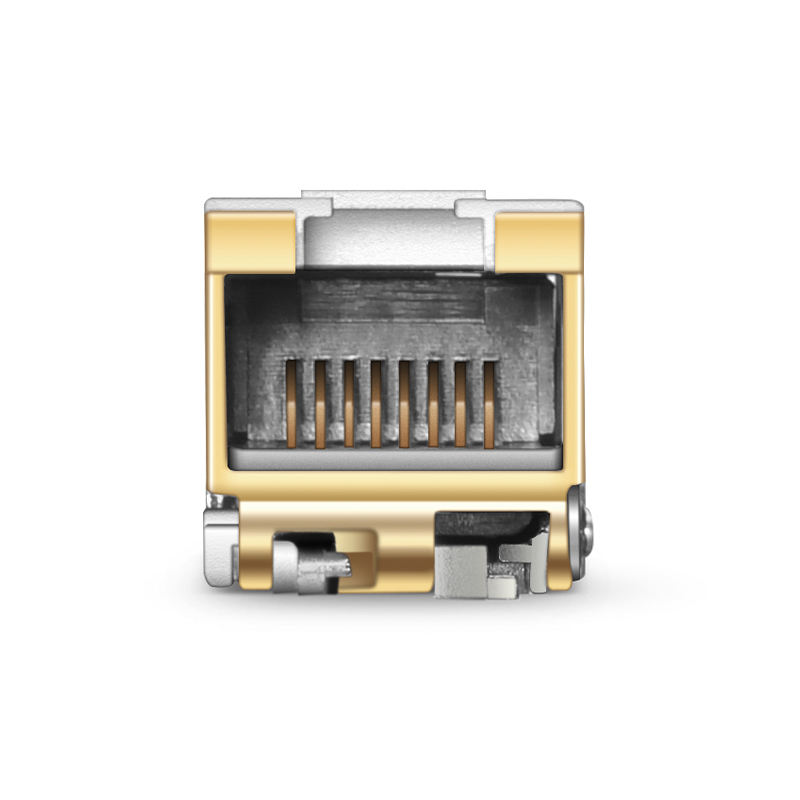
An SFP module (Small Form-factor Pluggable) is a compact, hot-swappable optical transceiver commonly used in networking equipment such as switches, routers, and fiber media converters.
The primary function of an SFP transceiver is to enable communication between network devices over fiber optic cables or copper connections.
Key characteristics include:
-
Hot-pluggable design
-
Compact form factor
-
Interchangeable interface
-
Support for multiple transmission standards
SFP modules are widely used in:
-
enterprise networks
-
telecom infrastructure
-
fiber access networks
-
data center switching systems
Overview of Optical Transceiver Types
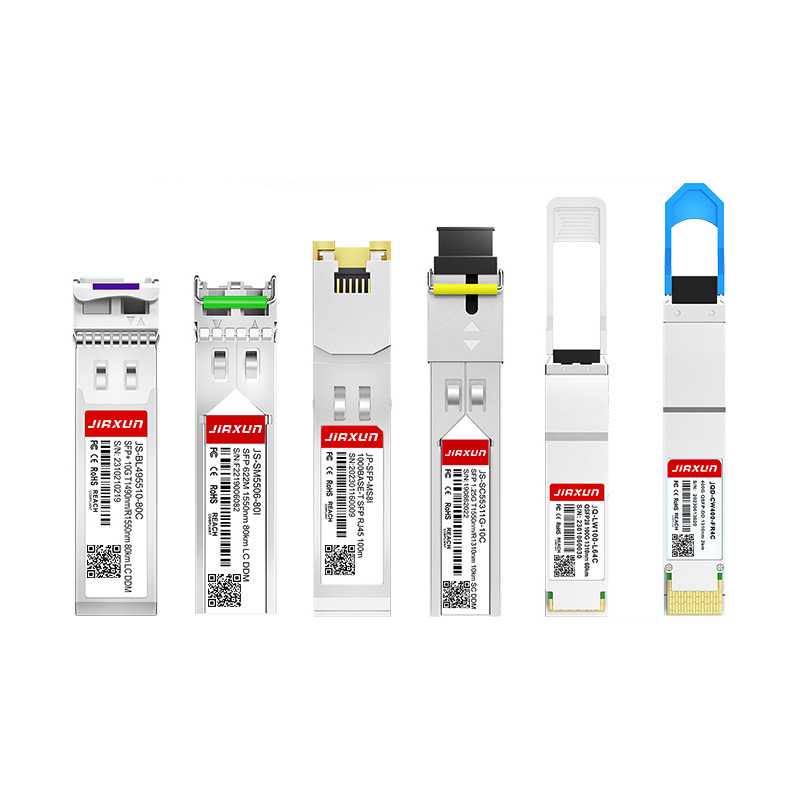
| Module Type | Speed | Form Factor | Wavelength | Distance | Typical Use |
|---|---|---|---|---|---|
| SFP | 1G | SFP | 850 / 1310 / 1550nm | 100m–120km | Enterprise networks |
| SFP+ | 10G | SFP+ | 850 / 1310nm | 300m–40km | Data centers |
| SFP28 | 25G | SFP28 | 850 / 1310nm | 100m–10km | Cloud networks |
| SFP56 | 50G | SFP56 | 850 / 1310nm | 100m–10km | AI/HPC |
| QSFP+ | 40G | QSFP+ | 850 / 1310nm | 150m–40km | Core switching |
| QSFP28 | 100G | QSFP28 | 850 / 1310nm | 70m–80km | Data centers |
| QSFP56 | 200G | QSFP56 | 850 / 1310nm | 100m–10km | Hyperscale DC |
| QSFP-DD | 400G | QSFP-DD | 1310nm | 500m–10km | Cloud infrastructure |
| OSFP | 400G | OSFP | 1310nm | 500m–10km | AI networking |
| QSFP-DD800 | 800G | QSFP-DD / OSFP | 1310nm | 100m–2km | AI clusters |
SFP Optical Modules (1G)
SFP modules represent the first widely adopted pluggable optical transceiver standard in Ethernet networks.
Technical Specifications
Speed: 1Gbps
Connector: LC Duplex
Fiber Type: SMF / MMF
Distance: 100 meters to 120 km
Common Standards
1000BASE-SX – short-range multimode fiber
1000BASE-LX – long-range single-mode fiber
1000BASE-ZX – ultra-long-distance transmission
Applications
Enterprise campus networks
Industrial Ethernet
Metro access networks

10G SFP+ Optical Modules
The 10G SFP+ transceiver maintains the same physical form factor as SFP but supports significantly higher bandwidth.
Key Features
Speed: 10Gbps
Transmission Distance: up to 80 km
Power Consumption: typically below 1.5W
Popular Types
10GBASE-SR
10GBASE-LR
10GBASE-ER
10G DAC / AOC cables
Applications
Top-of-rack switches
Enterprise core networks
Telecom aggregation networks

SFP28 Optical Modules (25G)
SFP28 modules support 25Gbps Ethernet and have become the building blocks for modern data center architectures.
Compared with 10G networks, 25G offers:
-
higher bandwidth efficiency
-
lower cost per gigabit
-
improved switch port density
Specifications
Speed: 25Gbps
Encoding: NRZ
Distance: 100m to 10km
Applications
Cloud computing infrastructure
Hyperscale data centers
Leaf-spine architectures

QSFP+ Optical Modules (40G)
QSFP+ modules combine four 10G channels to achieve 40G bandwidth.
Features
4 × 10Gbps lanes
MPO fiber interface
High port density
Applications
Data center aggregation switches
High-performance computing clusters
Enterprise backbone networks

QSFP28 Optical Modules (100G)
QSFP28 modules deliver 100G Ethernet using four 25G electrical lanes.
Common Types
100GBASE-SR4
100GBASE-LR4
100GBASE-CWDM4
Technical Specifications
Speed: 100Gbps
Distance: 70 meters to 80 km
Connector: MPO / LC
Applications
Data center spine switches
Cloud service providers
High-capacity backbone networks

200G Optical Transceivers (QSFP56 / QSFP-DD)
200G optical modules support PAM4 modulation technology, enabling higher bandwidth without increasing the number of fibers.
Key Specifications
Speed: 200Gbps
Modulation: PAM4
Distance: 100m – 10km
Applications
AI training clusters
High-performance computing
Large-scale data centers
400G Optical Transceivers (QSFP-DD / OSFP)
400G modules represent the mainstream high-speed networking solution used by hyperscale cloud providers.
Main Form Factors
QSFP-DD
OSFP
QSFP112
Technical Specifications
Speed: 400Gbps
Modulation: PAM4
Distance: 500m – 10km
Applications
Hyperscale data centers
Cloud computing networks
AI infrastructure
800G Optical Transceivers
800G optical modules are designed for next-generation network infrastructure.
Form Factors
QSFP-DD800
OSFP
Technical Characteristics
Speed: 800Gbps
Lane rate: 100G PAM4
Power consumption: 15W–18W typical
Applications
AI supercomputing clusters
Machine learning infrastructure
Next-generation hyperscale data centers
Future Trends in Optical Transceiver Technology
The demand for faster data transmission continues to push innovation in optical networking.
Key industry trends include:
Higher Transmission Speeds
Network speeds are evolving rapidly:
1G → 10G → 25G → 100G → 400G → 800G → 1.6T
PAM4 Signal Modulation
PAM4 technology doubles the data rate per channel compared to traditional NRZ signaling.
Silicon Photonics
Silicon photonics technology integrates optical and electronic components on a single chip, reducing cost and power consumption.
AI Infrastructure Demand
The rapid expansion of AI workloads is driving massive demand for 400G and 800G optical interconnects in modern data centers.

Conclusion
Optical transceivers have evolved dramatically, from 1G SFP modules to today’s 800G QSFP-DD and OSFP optical modules.
Choosing the correct module depends on several factors:
-
network architecture
-
bandwidth requirements
-
transmission distance
-
power consumption
-
cost efficiency
As data traffic continues to grow, next-generation technologies such as 800G and 1.6T optical modules will play a crucial role in enabling the future of cloud computing, AI infrastructure, and hyperscale data centers.
Invitation | Jiaxun (Huizhou) Intelligent Technology Invites You to the 2026 Global Sources Consumer Electronics Show
SFP+ 10GBASE-T RJ45 Module: Full Guide, Switch Compatibility, Test Data & Reliable Supplier
Related Article