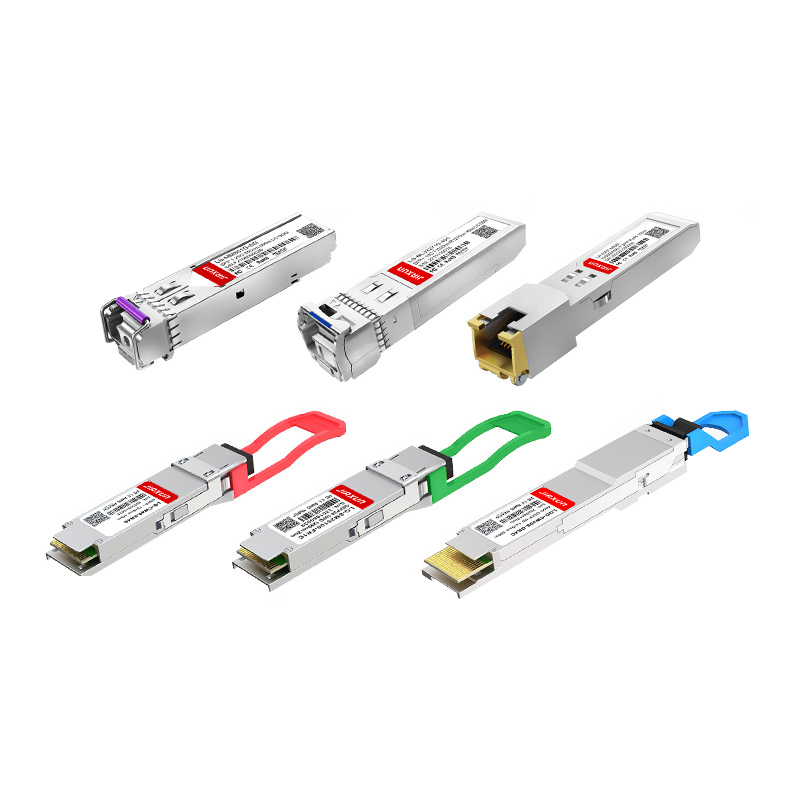
2025 10G SFP+ Module Compatibility List: Works with Cisco 9300/Huawei S5720?
For network engineers, IT managers, and procurement specialists, few questions induce more anxiety than this: "Will this third-party 10G SFP+ module work flawlessly in my expensive Cisco Catalyst 9300 or Huawei S5720 switch?" You're not just buying a piece of optics; you're investing in network stability, performance, and your own peace of mind.
The fear is real. Visions of dreaded %PHY-4-TRANSCEIVER_UNSUPPORTED errors in Cisco IOS XE or ominous "Uncertified Transceiver" warnings in iManager NCE flash before your eyes. OEM modules from Cisco, Huawei, and others come with a staggering premium, often constituting a massive portion of your network refresh budget. Yet, the allure of compatible modules, which can save you 70-80% per port, is tempered by the risk of downtime.
Let's cut through the FUD (Fear, Uncertainty, and Doubt). This definitive 2025 guide will provide a practical compatibility list, demystify the technology behind compatibility locking, and give you the technical knowledge and confidence to source reliable, high-performance 10G SFP+ modules that integrate seamlessly into your core network infrastructure.

Understanding the "Why": How Vendor Lock-In Actually Works
Before we dive into the list, it's crucial to understand what you're up against. Vendors like Cisco and Huawei don't use magical, proprietary hardware in their optics. The underlying laser and detector technology is often sourced from the same handful of renowned manufacturers (like Lumentum or Broadcom). The lock is purely software-based.
-
The EEPROM and the ACL: Every 10G SFP+ module contains a small memory chip (EEPROM). This chip holds vital information (vendor ID, model number, serial number, wavelength, transfer distance, etc.) that the switch's OS reads upon insertion. Cisco and Huawei switches run a verification routine, checking this data against an internal Access Control List (ACL) of "approved" vendor IDs and product codes.
-
The Result: If the module's EEPROM data doesn't match an entry on this privileged list, the switch OS will either:
-
A) Refuse to enable the port entirely (most common with older firmware).
-
B) Enable the port but flood the system logs with unsupported warnings, which can be a nightmare for monitoring systems.
-
C) In rare cases, on newer, more open platforms, it may simply work while logging a minor alert.
-
The 2025 Compatibility Landscape: It's Better Than You Think
The third-party optic industry has evolved dramatically. It's no longer a wild west of questionable quality. Reputable manufacturers have risen to the challenge, developing robust solutions to ensure seamless interoperability.
Method 1: Code Reprogramming (The Most Common Solution)
This is the standard approach for most compatible 10G SFP+ modules. Reputable suppliers program the module's EEPROM with the exact vendor ID, product code, and serial number format that the target switch (e.g., Cisco 9300) expects to see. This allows the module to pass the initial verification check and operate as a native one.
-
Crucial Point: The best suppliers do not simply clone one code. They maintain vast, updated databases of vendor IDs and use algorithms to generate unique, valid serial numbers for each module, preventing conflicts if two identical modules are used in the same chassis.
Method 2: The CLI Command "Override"
For many modern platforms, you can simply tell the switch to ignore the compatibility check. This doesn't change the module; it changes the switch's behavior.
-
For Cisco Catalyst 9300 (IOS XE):
# Enable the port even with unsupported transceiver
configure terminal
service unsupported-transceiver
no errdisable detect cause gbic-invalid
end

# To verify the module details, even if unsupported
show controllers ethernet-controller [interface] phy detail
Note: The exact command can vary slightly between IOS XE versions. Always check Cisco's documentation for your specific release.
-
For Huawei S5720 (V200R020+ OS):
# Enter system view
system-view

# Disable electronic label detection for the entire device
undo detect ethernet optical-module

# Or, to disable it for a specific interface
interface gigabitethernet 0/0/1
undo detect ethernet optical-module
Using these commands effectively neutralizes the vendor lock, allowing any well-made, standards-compliant 10G SFP+ module to function. However, many enterprises prefer the "set-and-forget" nature of pre-coded modules to avoid configuring every switch.

The 2025 Practical Compatibility List
This list is based on aggregated testing data from industry partners and labs. Always confirm with your specific supplier before bulk purchasing.
| Target Switch Series | Recommended 10G SFP+ Module Code | Key Notes & Testing Results |
|---|---|---|
| Cisco Catalyst 9300 | CISCO-10G-SR (SFP-10G-SR-S), CISCO-10G-LR (SFP-10G-LR-S) |
Compatibility: Excellent. Modules coded with the correct PID and serial number format are recognized as genuine. The service unsupported-transceiver command is a reliable fallback. Firmware Warning: Test on a non-critical port first. Some very recent IOS XE versions may have updated checks, but the third-party coding community is typically very fast to respond. |
| Huawei S5720-HI | HW-10G-SR-MM (SFP-10G-SR), HW-10G-LR-SM1310 (SFP-10G-LR) |
Compatibility: Very Good. The undo detect ethernet optical-module command is highly effective. Pre-coded modules from quality vendors work seamlessly without needing CLI overrides. The HI series is generally more lenient than some older Huawei core switches. |
| HPE/Aruba ProVision (54xx, 83xx) | HP-10G-SFPP-SR (J9150A), HP-10G-SFPP-LR (J9151A) |
Compatibility: Excellent. HPE/Aruba switches have historically been very friendly to third-party optics. Coding is straightforward and reliable. |
| Juniper EX Series | JNP-10G-SR (SFPP-10GE-SR), JNP-10G-LR (SFPP-10GE-LR) |
Compatibility: Excellent. Juniper's focus on standards compliance makes its platforms exceptionally open to quality third-party 10G SFP+ modules. |
| Arista 7000 Series | ARISTA-10G-SR-SFP-PLUS (SFP-10G-SR), ARISTA-10G-SR-SFP-PLUS |
Compatibility: Excellent. Arista is a strong proponent of open standards and disaggregation. Their switches perform minimal to no vendor coding checks. |
Beyond the Code: How to Vet a Quality Third-Party Supplier
The code gets the module recognized, but the hardware determines its performance and longevity. When evaluating a supplier, go beyond "Does it work?" and ask "How well will it work for years?"
-
Component Sourcing: Inquire about the laser and driver chips. Reputable manufacturers use chips from brands like Broadcom, MACOM, or Lumentum, not no-name, uncertified clones. This is the single biggest factor in module longevity and performance stability.
-
Rigorous Testing: Do they perform 100% end-of-line testing? This should include:
-
Real-Device Interoperability Testing: Plugging every module into a rack of actual switches (Cisco, Huawei, etc.) from their target list.
-
DDM/DOM Monitoring Validation: Ensuring the Digital Diagnostic Monitoring (Data Monitoring) functions for temperature, voltage, TX bias, TX power, and RX power are accurate and reliable. This is non-negotiable for professional network management.
-
Aging and Burn-in Tests: Running modules at elevated temperatures for an extended period (e.g., 48-72 hours) to identify and eliminate infant mortality failures.
-
-
Clear Warranty & Support: Look for a minimum 5-year warranty. This shows the supplier stands behind the quality and mean time between failures (MTBF) of their product. Their support team should be able to provide technical documents and compatibility statements.
-
Certifications: Legitimate products will have FCC, CE, and RoHS certifications. These are not just stickers on the box; they should have verifiable documentation proving compliance with electromagnetic interference and environmental safety standards.
Conclusion: Empowering Your Procurement Strategy
The era of being held hostage by OEM optics pricing is over. As we move through 2025, the market for compatible 10G SFP+ modules is mature, robust, and driven by quality and value. The key is moving from a price-only mindset to a value-and-reliability mindset.
You can now confidently procure optics that offer:
-
Identical performance to OEM modules at a fraction of the cost.
-
Full compatibility with leading switch platforms like the Cisco 9300 and Huawei S5720, either through sophisticated coding or simple CLI commands.
-
Superior warranty and support from specialists who live and breathe connectivity.
By understanding the technology behind the compatibility and knowing the right questions to ask your supplier, you can dramatically reduce your network costs without introducing risk, freeing up your budget for initiatives that truly drive business innovation.

Partnering for Performance: The Jiaxun Intelligent Technology Advantage
Navigating the world of compatible optics requires a partner, not just a supplier. This is where a technically proficient manufacturer like Jiaxun Intelligent Technology distinguishes itself. For over a decade, Jiaxun has been at the forefront of optical transceiver design and manufacturing, building a reputation for reliability that resonates with data center operators and enterprise network teams globally.
Jiaxun’s philosophy is simple: deliver OEM-grade performance without the OEM-grade price, but never compromise on the engineering rigor required to make that possible.
Why Jiaxun's 10G SFP+ Modules Are a Smart Choice for Your Cisco & Huawei Switches:
-
Deep-Dive Compatibility: Jiaxun doesn't just code modules; they engineer them for seamless integration. Their 10G SFP+ modules undergo exhaustive testing in their in-house lab, which features live racks of equipment from Cisco, Huawei, HPE, Juniper, and more. Every production batch is validated in real-world scenarios, ensuring that when you plug a module like their JS-MM3110-S2C (Multimode, 1330nm, 220m) or JS-BL273310-10C (Singlemode, 1310nm, 10km) into a Catalyst 9300, it is recognized immediately and performs flawlessly from day one.
-
Superior Component Foundation: Jiaxun builds its modules using high-reliability IC chips from industry leaders like Broadcom. This commitment to quality components ensures low bit error rates (BER), exceptional signal integrity, and significantly higher mean time between failures (MTBF) compared to modules built with inferior, uncertified chips. Their advanced low-power design (typically ≤1.8W) also reduces thermal load, a critical factor for maintaining switch health in high-density installations.
-
Uncompromising Quality Control: Every single Jiaxun 10G SFP+ module is subjected to a 100% full-parameter test. This process verifies:
-
Optical power output and receiver sensitivity.
-
Accurate DDM/DOM data across all parameters (temp, voltage, TX/RX power).
-
Error-free performance at maximum rated bandwidth.
-
This rigorous process is your guarantee against the "one bad module in a box of ten" that can waste hours of troubleshooting time.
-
-
Long-Term Commitment & Warranty: Jiaxun backs its quality promise with a comprehensive 5-year warranty, reflecting deep confidence in the longevity and stability of their products. Their technical support team understands network infrastructure and can provide detailed compatibility guidance and documentation.
For your next network upgrade or refresh, especially for mission-critical platforms like the Cisco 9300 or Huawei S5720, exploring Jiaxun's offerings is a prudent technical and financial decision. To view their full product portfolio, including detailed specifications and compatibility guides, visit their official website at www.jiaxunzg.com.
1G SFP Module Compatibility 2025: Works with Cisco 2960/HPE 1950?