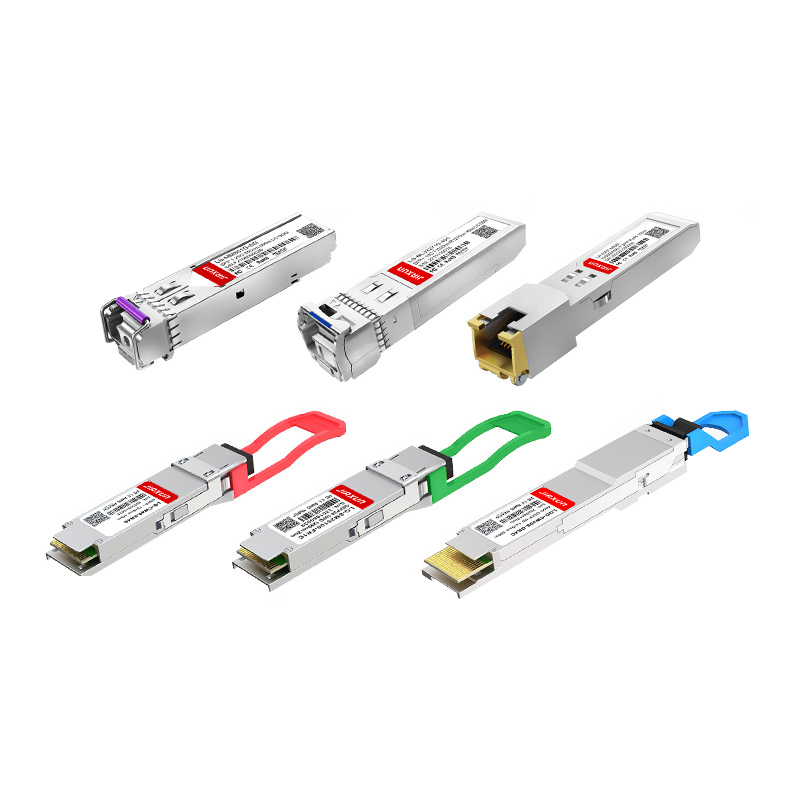
10G SFP+ Module Price Guide 2025: Original vs. Compatible (Cost Savings Breakdown)
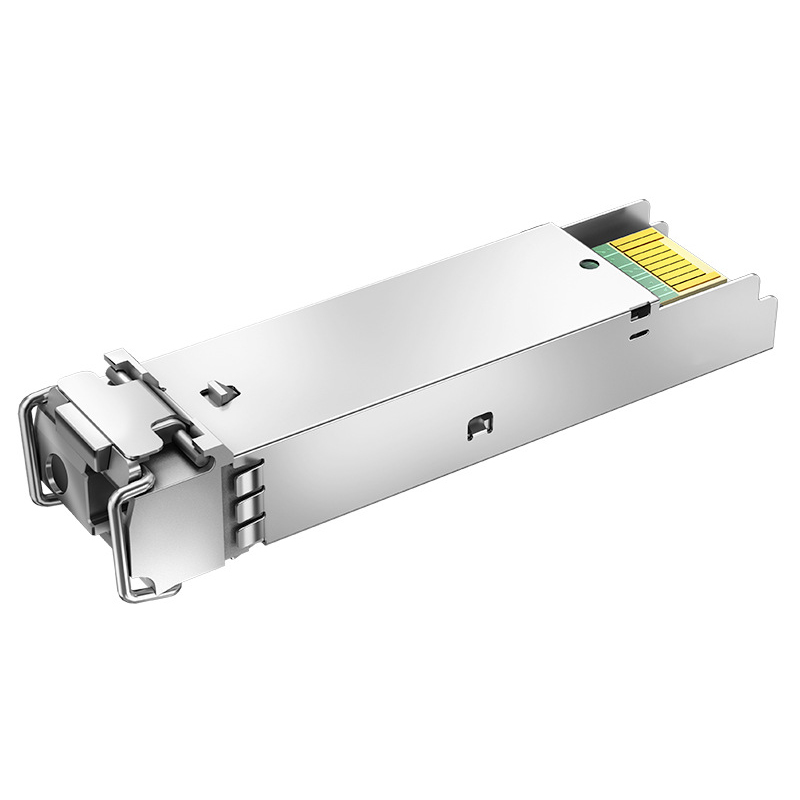
If you're sourcing 10G SFP+ modules, you've undoubtedly faced the staggering price disparity between OEM-branded modules and third-party compatible options. It's a decision that can save your company tens of thousands of dollars or lead to a nightmare of network instability and finger-pointing.
This guide isn't just a price list; it's a strategic financial and technical framework to help you make the smartest, most informed purchasing decision in 2025. We'll dissect the true cost drivers, analyze the risks and rewards, and provide a clear roadmap for maximizing your ROI without compromising on network performance.

The Great Divide: Understanding the Price Spectrum
First, let's establish the baseline. Prices fluctuate based on distributor, region, and quantity, but the following ranges are representative of the current market (2025).
| Module Type | Typical Price Range (USD) | Key Price Drivers |
|---|---|---|
| OEM (Cisco, Juniper, etc.) | $400 - $800+ | Brand premium, proprietary coding, bundled licensing/support, high-margin pricing model. |
| Third-Party "Compatible" (Premium) | $100 - $250 | Quality components (e.g., Broadcom, MaxLinear chips), rigorous compatibility testing, solid warranties, RoHS/REACH compliance. |
| Third-Party "Budget" (No-Name) | $20 - $80 | Unknown or lower-binned components, minimal testing, often non-compliant with environmental regulations, limited or no warranty. |
As you can see, the potential savings by opting for a premium compatible module are enormous, often 70-85% per module. For a large-scale deployment requiring hundreds of modules, this translates into six-figure savings.
Deconstructing the OEM Premium: What Are You Actually Paying For?
Why are OEM modules so expensive? It's not solely due to superior quality.
-
The "Lock-In" Tax: The primary cost driver is vendor lock-in. OEMs use a system called DOM (Digital Optical Monitoring) and proprietary EEPROM coding to uniquely identify their modules. Their switches’ IOS/NOS are designed to only fully trust and recognize these coded modules, often throwing alarms or even disabling ports for "unsupported" transceivers.
-
R&D & Overhead: A portion of the cost covers the extensive R&D that goes into developing the standards and initial hardware designs. However, this cost is amortized over millions of units sold over many years.
-
Bundled Support: The price often includes a perceived safety net. If an OEM module fails and causes a network issue, you have a single vendor to hold accountable. This bundled technical support comes at a significant premium.
-
High-Margin Business Model: Selling optics is an incredibly high-margin business for OEMs. It's a key revenue stream after the initial switch sale.

The Compatible Module Reality: Quality is a Spectrum
The term "compatible" is broad. It's crucial to understand the difference between premium compatible modules and budget knock-offs.
Premium Compatible Modules (The Smart Choice):
-
Components: Use high-grade, name-brand laser diodes and drivers from reputable manufacturers (e.g., Lumentum, Broadcom, Hisilicon). The use of a reputable chipset is the single biggest indicator of quality.
-
Testing: Undergo exhaustive MTR (Module Test Report) processes and are tested in real devices (Cisco 9300, Huawei S5720, Arista 7050, etc.) to ensure full interoperability and DOM data reporting.
-
Compliance: Are fully compliant with international safety and environmental regulations like FCC, CE, RoHS, and REACH. This is non-negotiable.
-
Warranty: Backed by a strong lifetime warranty (often 5 years), proving the manufacturer's confidence in their product.
Budget Knock-Off Modules (The False Economy):
-
Components: Use lower-binned or recycled components with inconsistent performance. They may fail prematurely or operate out of specified optical parameters.
-
Testing: Receive minimal to no testing. They might "link up" but cause subtle issues like high Bit Error Rates (BER), intermittent link flapping, or increased latency.
-
Compliance: Often lack proper certification. They can be a fire hazard (poor EMI shielding) or contain hazardous materials.
-
Warranty: Offer little to no meaningful warranty support.
The True Total Cost of Ownership (TCO) Analysis
The upfront purchase price is only part of the equation. To understand the real cost, you must calculate TCO.
TCO for OEM Modules:
-
Higher initial cost
-
Lower perceived risk
-
Simplified support (single vendor)
TCO for Premium Compatible Modules:
-
Low initial cost (Massive Savings)
-
Negligible risk difference from OEM if sourced correctly
-
Potential need to manage a second vendor relationship
TCO for Budget Knock-Offs:
-
Lowest initial cost
-
Very high risk of network downtime
-
High cost of troubleshooting (engineer hours)
-
High cost of replacement
-
Potential voiding of switch warranty (a common myth, often disproven)
The Verdict: While budget modules have a catastrophically high TCO, premium compatible modules almost always offer the lowest TCO. The massive capital expenditure (CapEx) savings far outweigh the minimal, mitigated risk.

A Strategic Procurement Guide for 2025
How do you safely capture these savings? Follow this checklist:
-
Prioritize Certification Over Cost: Your first question should not be "how much?" but "what certifications do you have?" Demand proof of RoHS, REACH, and FCC compliance.
-
Demand Transparency on Components: Ask which laser driver and PHY chips are used. A reputable supplier will be transparent. Preference suppliers using Broadcom, MaxLinear, or other known chipsets.
-
Insist on Real Compatibility Testing: Ask for specific MTRs and compatibility guarantees for your exact switch model and OS version. A serious supplier will have a vast compatibility list.
-
Understand the Warranty: A lifetime warranty is standard among quality providers. Read the terms.
-
Order Samples FIRST: Never place a bulk order without testing samples in your lab and, if possible, in a non-critical part of your production network. Monitor for optical power stability, temperature, and errors.
-
Consider the Supplier's Expertise: Are they technical experts who can answer deep questions? For instance, could they advise on the nuances between a 1G SFP+ Module (which doesn't exist—a common confusion) and a true 10G SFP+ module? The former is a misnomer; SFP+ is the 10G form factor. A true expert would clarify that while an SFP+ port can often accept a 1G SFP module (due to backward compatibility), a "1G SFP+ Module" is not a standard product. This level of knowledge separates true experts from mere resellers.
Conclusion: A Data-Driven Decision
The evidence is clear: for the vast majority of enterprises and data centers, sourcing premium, certified third-party 10G SFP+ modules is the most financially sound and technically robust decision in 2025.
The OEM premium is no longer justified given the maturity of the compatible module market. The risk is not in choosing third-party; it's in choosing the wrong third-party supplier. By focusing on quality, certification, and testing, you can achieve massive cost savings while maintaining, and often exceeding, the performance and reliability of OEM optics.
Partner with a Global Leader in Optical Connectivity
Navigating the transceiver market requires a partner you can trust—one that combines engineering excellence with rigorous quality control and transparent pricing. Jiaxun Intelligent Technology (佳迅智能科技) stands out as a globally recognized enterprise specializing in the research, development, and production of high-performance optical modules, including SFP cages and a comprehensive range of transceivers.

Why Choose Jiaxun as Your SFP+ Module Supplier?
-
Uncompromising Quality & Compatibility: Jiaxun’s 10G SFP+ modules utilize advanced, low-power design (≤1.8W) and high-reliability chip solutions from industry leaders like Broadcom. Every module undergoes stringent real-device compatibility testing to ensure seamless integration with major switch brands from Cisco, Juniper, Arista, Huawei, and more. You get flawless performance without the vendor lock-in.
-
Full Spectrum of Solutions: Whether you need SR (Short Reach), LR (Long Reach), or ER/ZW (Extended Reach) modules for multimode or singlemode fiber, Jiaxun’s portfolio covers all standard and specialized use cases, with transmission distances from 100 meters to 80 kilometers. Their expertise also extends to higher-rate 25G and 100G modules, providing a one-stop solution for your evolving network needs.
-
Rigorous Compliance & Lifetime Warranty: All Jiaxun products are designed and manufactured in compliance with international standards (IEEE 802.3, SFP+ MSA) and carry essential certifications (CE, FCC, RoHS). This commitment to quality is backed by a solid lifetime warranty, ensuring long-term peace of mind and the lowest total cost of ownership.
-
Engineering-Led Customer Focus: Beyond just selling products, Jiaxun provides expert technical support. Their team can help you design optimal connectivity solutions, troubleshoot complex deployment scenarios, and advise on future-proofing your infrastructure.
For network engineers, IT managers, and procurement specialists who value performance, reliability, and significant cost savings, Jiaxun Intelligent Technology represents a smarter alternative to overpriced OEM optics.
To explore their extensive product catalog, review detailed compatibility lists, and request samples, visit their official website at www.jiaxunzg.com. Discover how Jiaxun can help you optimize your network's performance and budget simultaneously.
Ethernet SFP Module Buying Guide: Complete Breakdown from Specs to Compatibility
1G SFP Module Compatibility 2025: Works with Cisco 2960/HPE 1950?