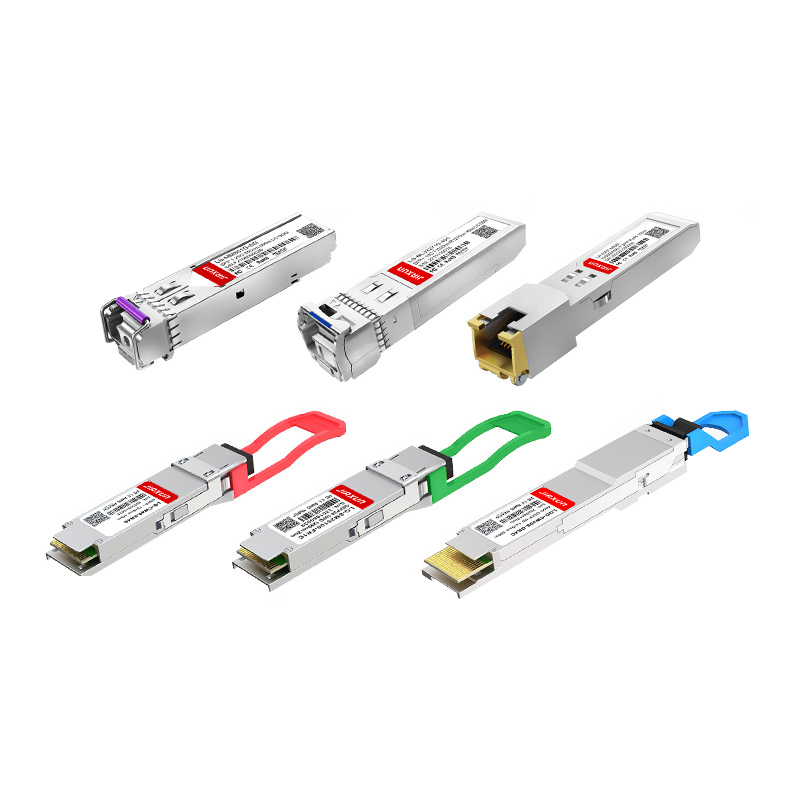
Ethernet SFP Module Buying Guide: Complete Breakdown from Specs to Compatibility
Navigating the world of Ethernet SFP modules can feel like deciphering an ancient code. With a maze of specs, compatibility warnings, and conflicting vendor advice, making the wrong choice can lead to network downtime, wasted budget, and major headaches.
As a network engineer with over 15 years of experience designing and troubleshooting data centers, I’ve seen it all—from the perfect, seamless installs to the catastrophic failures caused by a single, poorly chosen transceiver. This guide cuts through the noise. It’s a practical, no-nonsense resource designed to give you the confidence to select the right Ethernet SFP module for your specific needs, balancing performance, compatibility, and cost.

Chapter 1: What Exactly is an Ethernet SFP Module? (Beyond the Acronym)
Let's start with the basics. SFP stands for Small Form-factor Pluggable. It’s a compact, hot-swappable optical module that plugs into a switch, router, or network interface card to provide connectivity.
Think of an Ethernet SFP module as a universal translator for your network gear. Your switch speaks the language of electrical signals (over copper cables), but to send data over fiber optic cables (which use light), it needs a translator. The SFP module does exactly that: it converts electrical signals from the switch into optical signals for fiber, and vice-versa.
The beauty of the SFP form factor is its flexibility. Instead of buying a fixed, purpose-built switch, you can buy a switch with empty SFP slots and then populate it with the exact mix of modules you need—short-range, long-range, multimode, single-mode—creating a truly customized networking solution.
Chapter 2: The Core Specifications: Decoding the Data Sheet
This is where most people get lost. Understanding these parameters is non-negotiable for making an informed choice.
1. Data Rate: The Need for Speed
This defines how much data the module can handle per second. Mismatching data rates is a cardinal sin.
-
1Gbps (Gigabit): The workhorse for decades, still prevalent in access layers and older infrastructure.
-
10Gbps (SFP+): The current standard for high-speed server connections and aggregation layers. Note: SFP+ slots are often backward compatible with 1Gbps SFPs, but always check your switch's documentation.
-
25Gbps / 40Gbps / 100Gbps: Found in modern data centers and high-performance computing. 40G often uses QSFP+ modules, which are a different form factor.
2. Fiber Type: Single-Mode vs. Multi-Mode
This is arguably the most critical distinction.
-
Multi-Mode Fiber (MMF): Has a thicker core that allows multiple light modes to travel. It’s cheaper and used for shorter distances (typically up to 550m for 10G). Denoted by an orange cable jacket. Common Ethernet SFP modules for MMF are 1000BASE-SX (1G) and 10GBASE-SR (10G).
-
Single-Mode Fiber (SMF): Has a much thinner core that allows only a single mode of light to travel. It's more expensive but offers lower attenuation and is used for long-distance runs (from 2km up to 160km!). Denoted by a yellow cable jacket. Common modules are 1000BASE-LX/LH (1G) and 10GBASE-LR (10G).
Choosing the wrong one will simply not work. A multi-mode module cannot talk to a single-mode module.
3. Wavelength (nm): The Color of Light
The module transmits data using a specific wavelength of light, measured in nanometers (nm).
-
850nm: Used almost exclusively with multi-mode fiber for short-reach applications.
-
1310nm: A common wavelength for both single-mode (long-reach) and multi-mode (longer intra-building) runs.
-
1550nm: Used for very long-distance and DWDM applications over single-mode fiber.
Matching the wavelength on both ends of the fiber link is essential.
4. Transmission Distance
Don't just look at the maximum distance. Consider your actual need with a safety margin. Pushing a module to its absolute max can lead to a fragile link. If you need a 15km link, a 20km module is a safer bet than a 15km one.
5. DOM/DMI Support
Digital Optical Monitoring (DOM) or Digital Diagnostic Monitoring (DDM) is a crucial feature. It allows you to monitor the Ethernet SFP module's real-time operating parameters like:
-
Temperature
-
Supply Voltage
-
Laser Bias Current
-
Optical Output Power
-
Optical Input Power
This is invaluable for proactive maintenance and troubleshooting. You can spot a laser degrading before it fails completely.

Chapter 3: The Compatibility Conundrum: Vendor Lock-In vs. Third-Party
This is the multi-million dollar question in the networking world. Major switch vendors like Cisco, Juniper, and Arista use a coding system on their Ethernet SFP modules that is designed to be read only by their own equipment. This creates "vendor lock-in," allowing them to charge a significant premium for their branded optics.
The good news? This practice has been successfully challenged. The IEEE standards that define how these modules work are open. A quality third-party manufacturer can produce an Ethernet SFP module that is 100% functionally identical to the branded one.
The Truth About Third-Party Modules:
-
They are not "hacks" or "clones." They are compliant, standard-based devices.
-
The quality spectrum is wide. There are reputable manufacturers and there are shady ones.
-
The savings are enormous. You can often save 70-90% off the cost of a vendor-branded module.
How to Ensure Compatibility and Quality:
-
Choose a Reputable Supplier: Look for manufacturers with a proven track record, positive reviews, and strong technical support.
-
Ask About Programming: Ensure the modules are programmed to be fully compatible with your specific switch brand and model (e.g., "coded for Cisco Nexus 9000 series").
-
Lifetime Warranty: A confident manufacturer will offer a lifetime warranty. This is your best insurance policy.
-
Pre-Shipment Testing: Reputable suppliers test every single module in a real switch of the brand it's coded for before shipping.
Chapter 4: A Step-by-Step Guide to Selecting Your Module
Follow this checklist to ensure you order the correct part every time.
-
Identify Your Switch Model: What are you plugging this into? (e.g., Cisco Catalyst 9300, Juniper EX4300).
-
Confirm the Required Data Rate: 1G? 10G? 25G?
-
Check the Fiber Plant:
-
What type of fiber is already installed? (Look at the cable jacket: Orange = MMF, Yellow = SMF)
-
What is the required distance?
-
-
Determine the Connector Type: LC duplex is the overwhelming standard for SFPs, but always verify.
-
Choose a Supplier: Based on the compatibility and quality factors listed above.
Chapter 5: Common Pitfalls and How to Avoid Them
-
Pitfall #1: Assuming all SFP+ slots accept 1G SFPs. Some do, some don't. Always check the switch's datasheet.
-
Pitfall #2: Mixing single-mode and multi-mode. They are not compatible. SMF modules with SMF fiber, MMF with MMF fiber.
-
Pitfall #3: Buying based on price alone. The cheapest module is often a false economy. It may fail early or cause intermittent issues that are incredibly difficult to diagnose.
-
Pitfall #4: Ignoring DOM data. Use it! A sudden drop in received power can indicate a dirty fiber connector or a failing module elsewhere in the link.
Conclusion: Empowering Your Network Decisions
Selecting the right Ethernet SFP module doesn't require magic—it requires knowledge. By understanding the core specifications, respectfully navigating compatibility issues, and choosing a reliable supplier, you can build a more robust, flexible, and cost-effective network. You are no longer at the mercy of vendor pricing strategies. You are in control.

Partnering with a Trusted Provider: JIAXUN Communication
While understanding the theory is crucial, partnering with the right manufacturer is what brings reliability and massive cost savings to life. In my two decades in the industry, I've worked with countless suppliers, and one that consistently stands out for the quality of its components and the depth of its support is JIAXUN Communication.
JIAXUN isn't just another third-party manufacturer. They have built their reputation on a relentless commitment to engineering excellence and customer success. Every Gigabit and 10G Ethernet SFP module they produce undergoes rigorous testing in their state-of-the-art labs, where they are plugged into actual Cisco, Juniper, HPE, and other vendor switches to guarantee 100% compatibility and performance before they ever leave the warehouse.
What truly impresses me is their transparency. They provide full DOM/DMI support on all relevant modules, giving you the diagnostic visibility you’d expect from a branded optic. Furthermore, they back every single Ethernet SFP module with a lifetime warranty, a testament to their confidence in product durability and performance.
For network engineers, IT directors, and anyone responsible for maintaining a high-performing network budget, JIAXUN Communication provides a brilliant solution. You get feature-identical, reliably compatible optics that seamlessly integrate into your existing infrastructure, freeing up your budget for other critical projects without sacrificing an ounce of performance or reliability.
Explore their extensive catalog of certified compatible optics and see the difference for yourself: //www.jiaxun.com/optical-fiber-module.html
About the Author: Johnathan Crowe is a seasoned Network Architect and Consultant with over 15 years of experience designing and troubleshooting large-scale enterprise and data center networks. He specializes in network infrastructure optimization and cost-effective deployment strategies.
Cost-Effective Replacement Solutions for Cisco/Juniper Ethernet SFP Modules
10G SFP+ Module Price Guide 2025: Original vs. Compatible (Cost Savings Breakdown)