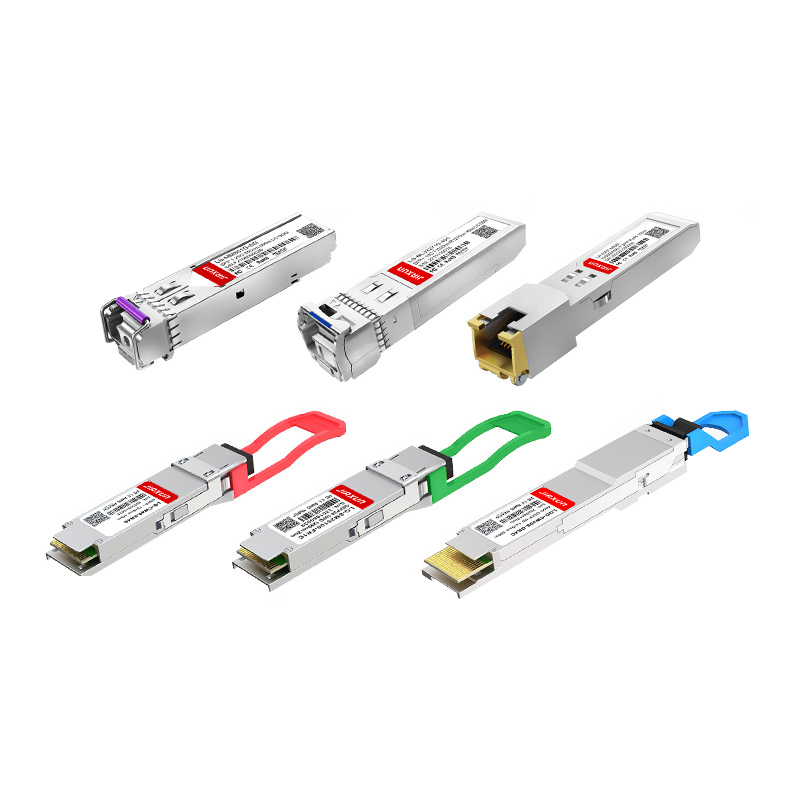
The Definitive Multimode SFP Module Buying Guide: Specs, Compatibility & Cost Considerations
For network engineers, IT managers, and data center architects, few purchases seem as deceptively simple yet carry as much potential for performance issues and budget waste as the multimode SFP module. These small form-factor pluggable transceivers are the workhorses of short-reach, high-speed networking, found everywhere from server racks to campus backbones. Yet, navigating the specifications, compatibility claims, and vast price differences can feel like a minefield.
I’ve spent over 15 years designing and troubleshooting fiber optic networks, and I’ve seen the consequences of both good and bad procurement decisions. A well-chosen multimode SFP module disappears into your network, providing years of reliable service. A poor choice can lead to mysterious link drops, corrupted data, costly downtime, and a frustrating cycle of finger-pointing between hardware vendors. This guide is designed to cut through the confusion. It’s a practical, no-nonsense resource that will equip you with the knowledge to confidently select the right multimode SFP module for your specific needs, balancing technical requirements with financial wisdom.

Chapter 1: Multimode Fiber 101: The Foundation of Your Choice
Before you can choose a module, you must understand the medium it operates on. Your choice of multimode SFP module is intrinsically linked to the type of fiber cable already installed or being deployed.
Multimode fiber (MMF) is designed for short-distance, high-bandwidth communication using light-emitting diodes (LEDs) or vertical-cavity surface-emitting lasers (VCSELs). Its larger core diameter (compared to single-mode fiber) allows multiple modes of light to propagate. The critical factor here is the fiber’s bandwidth-distance product, measured in MHz·km. Higher grades of fiber offer greater bandwidth over longer distances.
The industry standardizes MMF into several grades, but the most relevant for modern networks are:
-
OM3 (Optical Multimode 3): The "laser-optimized" 50µm fiber. Designed for 10Gb/s transmission, it can support 10GBase-SR links up to 300 meters. Often identified by an aqua blue jacket.
-
OM4 (Optical Multimode 4): An enhancement of OM3. It has a higher bandwidth, allowing 10GBase-SR links up to 400 meters and is the minimum recommended for reliable 40G and 100G links using parallel optics (e.g., QSFP+). Also uses an aqua blue jacket.
-
OM5 (Optical Multimode 5): The newer "wideband" multimode fiber. Designed to support Short Wavelength Division Multiplexing (SWDM) using multiple wavelengths to carry 40G, 100G, and beyond over a single fiber pair. It is backward compatible with OM4 and is identified by a lime green jacket.
The Golden Rule: Your multimode SFP module's achievable distance and data rate are ultimately constrained by the lowest-grade component in the link—the fiber. Using an OM4-rated module on OM3 fiber means you are limited to OM3's distance capabilities.
Chapter 2: Decoding the Spec Sheet: Key Parameters Explained
When evaluating a multimode SFP module, these are the non-negotiable specifications you must understand.
-
Data Rate & Standard: This defines the module's fundamental purpose.
-
1Gbps (Gigabit): 1000BASE-SX. The legacy workhorse for 1G Ethernet.
-
10Gbps (10 Gigabit): 10GBASE-SR. The current absolute standard for server access and uplinks.
-
25Gbps (25 Gigabit): 25GBASE-SR. Emerging as the new standard for high-performance server connectivity in data centers, offering a cleaner migration path from 10G to 100G.
-
Ensure the module's standard matches your switch port's capability. A 1G module will not work in a 10G port (and vice versa), unless the port is explicitly configured for backward compatibility.
-
-
Wavelength: For standard multimode applications, this is almost always 850nm. This is the wavelength at which VCSEL lasers operate most efficiently for short-range communications.
-
Maximum Transmission Distance (Link Budget): This is not a fixed number but a calculation based on your fiber type. The spec sheet will list distances for different fiber grades (e.g., 33m on OM1, 82m on OM2, 300m on OM3, 400m on OM4). Always derate this by 10-15% for safety margins, accounting for splices, connectors, and age degradation of the fiber.
-
DOM/DDDM Support: Digital Optical Monitoring (DOM) or Digital Diagnostic Monitoring (DDM) is a critical feature. It allows you to monitor the module's real-time operating parameters via the switch CLI:
-
Temperature
-
Supply Voltage
-
Laser Bias Current
-
Transmit Optical Power
-
Received Optical Power
This data is invaluable for proactive maintenance, allowing you to identify a degrading transmitter or a dirty connector before it causes a network outage.
-
-
Power Consumption: Lower is better, especially in high-density switches. A typical 10GBASE-SR multimode SFP module should consume < 1 Watt. High power consumption can lead to thermal issues and reduced lifespan.

Chapter 3: The Compatibility Conundrum: Navigating Vendor Lock-In
This is where most of the fear, uncertainty, and doubt (FUD) resides. Major switch vendors (Cisco, Juniper, Arista, etc.) use a proprietary code on their branded modules. When inserted, the switch checks for this code. If it's missing or incorrect, the switch may log an error message or simply refuse to enable the port.
However, a 2018 legal precedent essentially made this practice unenforceable. It is perfectly legal to manufacture and use third-party, compatible multimode SFP modules.
Ensuring Compatibility: A Practical Checklist
-
Choose a Reputable Supplier: This is the most important step. Look for manufacturers with a strong track record, positive user reviews, and responsive technical support.
-
Provide Your Switch Model and OS Version: A serious supplier will ask for this information. They pre-program their modules with the correct code for your specific hardware and software.
-
Demand a Lifetime Warranty: A supplier that offers a lifetime warranty is supremely confident in their product's quality and compatibility. This is your best insurance policy.
-
Verify DOM Support: Ensure the compatible module offers full DOM/DMM support, just like the branded original.
The savings are staggering. Where a branded 10GBASE-SR module might cost $300-$800, a high-quality, fully compatible third-party multimode SFP module typically costs $50-$90, offering identical performance and reliability.
Chapter 4: The True Cost Analysis: Beyond the Price Tag
The initial purchase price is only one component of the Total Cost of Ownership (TCO). A smart buying decision considers all factors:
-
Initial Purchase Price: The dramatic savings of third-party modules are undeniable.
-
Reliability & Mean Time Between Failure (MTBF): A poorly made module, regardless of origin, will fail. A high-quality third-party module from a reputable vendor will have a MTBF on par with branded optics (often over 500,000 hours).
-
Warranty & Support: A lifetime warranty that includes advance replacement is invaluable. It eliminates the cost of stocking expensive spares.
-
Operational Risk: The cost of network downtime is immense. The risk of downtime from a module failure is mitigated by the supplier's warranty and support. The risk of not being able to afford enough modules for a project is a very real operational risk that third-party options eliminate.
Verdict: For the vast majority of deployments, high-quality third-party multimode SFP modules offer a dramatically superior TCO, freeing up budget for other critical projects.

Chapter 5: A Step-by-Step Procurement Checklist
Before you click "buy," run through this list:
-
Confirm Data Rate: What speed do you need? (1G, 10G, 25G)
-
Audit Your Fiber Plant: What fiber type is installed? (OM3, OM4, OM5) What is the exact required distance? Add a 10% margin.
-
Identify Connector Type: LC duplex is the standard.
-
Check Switch Compatibility: Note the exact switch model and OS version.
-
Select a Supplier: Choose one based on warranty, support, and reputation, not just the lowest price.
-
Place a Pilot Order: For a large deployment, order a small batch first. Test them thoroughly in a non-critical link for a week. Monitor DOM data and check for errors.
Frequently Asked Questions (FAQ)
Q1: Will using a third-party multimode SFP module void my switch warranty?
A: No. Vendors cannot void the warranty for your entire switch based on the use of a third-party transceiver. They can only decline support for the module itself, which is irrelevant if your supplier provides a lifetime warranty and support.
Q2: Can I use an OM4-rated module on OM3 fiber?
A: Yes, absolutely. The module will operate, but you will be limited to the maximum distance supported by OM3 fiber (e.g., 300m for 10G instead of 400m).
Q3: Why does my multimode SFP link have high errors or keep dropping?
A: This is rarely a faulty module. The most common causes are: 1) Dirty fiber end-faces - clean with a proper LC cleaner. 2) Physical bends or kinks in the cable exceeding the bend radius. 3) A mismatch between the fiber type and the distance/data rate. 4) A faulty patch cable.
Q4: What is the difference between 10GBASE-SR and 10GBASE-SR-S?
A: The "S" typically stands for "short reach," indicating a lower-power variant designed for even shorter distances, often consuming less power and generating less heat. They are perfect for ultra-dense switching environments.
Q5: How can I check if the module is working correctly?
A: Use the switch's command-line interface. On Cisco switches, use show interface transceiver detail. On Juniper, use show interfaces diagnostics optics. Check that the Tx and Rx power levels are within the recommended range and that no errors are incrementing on the interface.
A Partner in Performance and Value: Jiaxun Intelligent Tech
Selecting the right technology is only half the battle; sourcing it from a manufacturer that guarantees flawless performance is the other. In the complex world of fiber optics, where compatibility and quality are paramount, Jiaxun Intelligent Technology has established itself as a trusted partner for global enterprises and data centers.
Jiaxun distinguishes itself through a commitment to vertical integration and rigorous testing. They understand that a multimode SFP module must be more than just a clone; it must be a reliable, high-performance component in its own right. Their modules are designed and manufactured in-house, utilizing high-grade components from industry leaders like Broadcom to ensure low power consumption (≤1.8W), exceptional signal integrity, and full compliance with IEEE 802.3 and SFP MSA standards.
What truly sets Jiaxun apart is their validation process. Every single multimode SFP module is tested for performance and, crucially, for compatibility. They maintain a lab of switches from all major vendors (Cisco, Juniper, Arista, HPE, etc.) to ensure that when you receive a module coded for your platform, it has been proven to work seamlessly. This eliminates the guesswork and risk from procurement.
Backed by a lifetime warranty and RoHS/CE certifications, Jiaxun's products offer a risk-free path to achieving 90% savings on your optics budget without compromising on network stability or performance. For network professionals who value both fiscal responsibility and operational excellence, Jiaxun provides a proven, engineering-driven solution.
To explore their range of certified compatible multimode SFP modules and access detailed technical specifications, visit their official site:
//www.jiaxunzg.com/optical-fiber-module.html
About the Author: Mark Jenkins is a Network Infrastructure Consultant with over 15 years of experience optimizing data center and enterprise networks for financial services and technology firms. He specializes in optical networking, hardware procurement strategy, and implementing sustainable cost-reduction programs without sacrificing performance or reliability.
What is an SFP Transceiver (SFP Module)? Complete Guide for Networking Professionals
Cost-Effective Replacement Solutions for Cisco/Juniper Ethernet SFP Modules