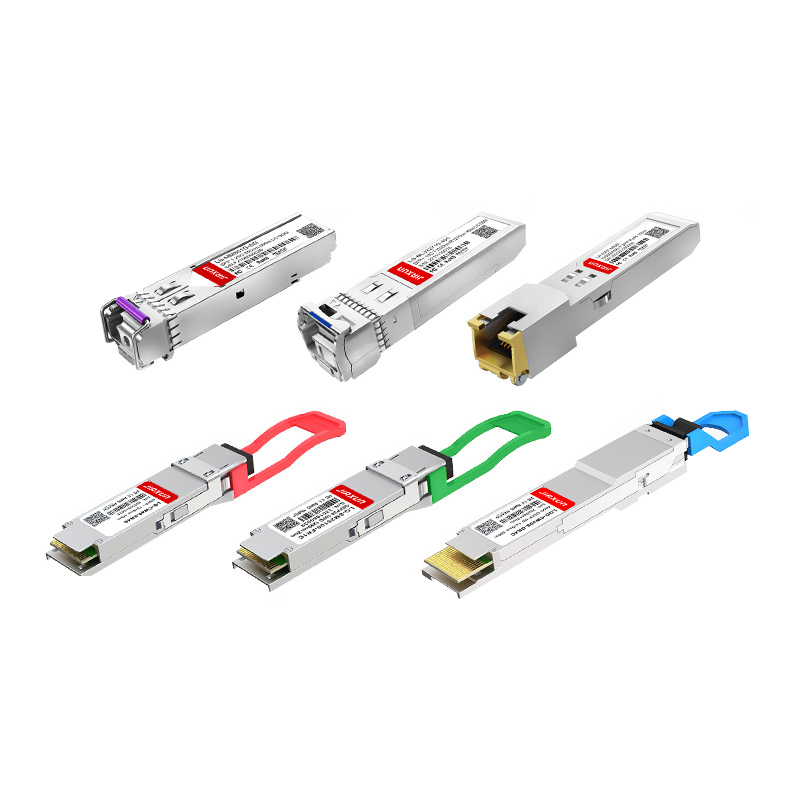
Cost-Effective Replacement Solutions for Cisco/Juniper Ethernet SFP Modules
For any network administrator or IT decision-maker, few moments induce more dread than receiving a quote for a branded Ethernet SFP module from Cisco or Juniper. The staggering cost, often hundreds or even thousands of dollars for a single transceiver, can demolish annual hardware budgets and stall critical network upgrades. For years, this has been the accepted reality—a painful form of vendor lock-in where the fear of incompatibility and network instability keeps organizations paying a premium.
But what if I told you that this fear is largely unfounded? With over two decades of experience designing and troubleshooting enterprise and data center networks, I've guided countless organizations through the transition to high-quality, third-party optics. The truth is, you can achieve 100% compatibility and reliability for a fraction of the cost. This guide will cut through the FUD (Fear, Uncertainty, and Doubt), provide a clear roadmap for selecting alternative Ethernet SFP modules, and ultimately empower you to take back control of your network budget.

Chapter 1: Understanding the Vendor Lock-In Strategy
First, it's crucial to understand why Cisco, Juniper, and other major vendors charge so much for what appears to be a simple component.
The "Magic Code" and ID PROM
At the heart of the lock-in strategy is a small chip inside every branded Ethernet SFP module called the ID PROM. This chip contains vital information about the module's specs—its type, serial number, manufacturer, and capabilities. Switch operating systems like Cisco IOS/NX-OS or Juniper Junos are programmed to read this chip upon insertion.
If the module isn't from the vendor's approved list and doesn't have the exact, expected "magic code" in its PROM, the switch will often reject it, logging a stern error message like:
%PHY-4-UNSUPPORTED_TRANSCEIVER: Unsupported transceiver in interface Te1/1/1
Vendors justify this by citing quality assurance and supportability. However, the underlying optics are built to published Multi-Source Agreements (MSAs)—industry standards that ensure interoperability. The prohibitive pricing is, in essence, a lucrative business model that capitalizes on your fear of downtime.
Chapter 2: The Legal and Technical Landscape of Third-Party Optics
The Legality: You're in the Clear
A common concern is the legality of using third-party modules. This was settled decisively in 2019. Cisco dropped its long-running lawsuit against a third-party optic manufacturer. The result? It is perfectly legal to manufacture and sell compatible Ethernet SFP modules. Vendors cannot void your entire switch's warranty simply for using a third-party optic. They can only decline support for the specific third-party module itself, which is a non-issue if you source from a reputable provider.
The Technical Reality: Debunking the Myths
-
Myth 1: "Third-party modules are less reliable." This is the biggest misconception. Reputable third-party manufacturers use the same fundamental optical components (lasers, detectors) from the same top-tier suppliers as the major brands. The difference in failure rates between a high-quality third-party module and a branded one is statistically negligible.
-
Myth 2: "They will cause network instability." A faulty module of any origin can cause problems. However, a quality-tested, MSA-compliant Ethernet SFP module from a trusted supplier will perform identically to its branded counterpart. It will report the same DOM/DMI data, operate at the same temperatures, and handle data with the same integrity.
-
Myth 3: "They won't work with new software updates." Vendors occasionally change their code in new OS releases to block third parties. reputable suppliers treat this as a critical issue and rapidly release newly coded modules, often within weeks, to maintain compatibility. They guarantee their modules will work with the switch OS versions listed at the time of purchase.

Chapter 3: A Practical Guide to Selecting Your Replacement Module
Switching to cost-effective optics doesn't mean buying the cheapest option on eBay. It requires a strategic approach.
Step 1: Due Diligence on the Supplier
This is the most critical step. Your goal is to find a partner, not just a store.
-
Technical Support: Do they have real engineers you can speak to? Can they provide compatibility guarantees for your specific switch model and OS version?
-
Testing and Warranty: Do they 100% test every module in live equipment before shipping? Do they offer a lifetime warranty? This is the single best indicator of quality confidence.
-
Transparency: Are they clear about their components and manufacturing process?
-
Reviews and Reputation: Look for long-standing companies with testimonials from other enterprises.
Step 2: The Specification Match
You must match the technical specs of your original module exactly.
-
Form Factor: SFP, SFP+, QSFP28?
-
Data Rate: 1G, 10G, 25G, 40G?
-
Fiber Type & Distance: Single-mode (LX, LR, ER, ZR) or Multi-mode (SX, SR)? What is the required reach? (e.g., 10GBASE-SR for 300m on OM3 MMF)
-
Wavelength: 850nm, 1310nm, 1550nm?
-
DOM/DMI Support: Ensure the module supports Digital Optical Monitoring for troubleshooting.
Step 3: The Compatibility Guarantee
A serious supplier will ask for your switch model and OS version. They will then provide a module that is pre-coded to be fully compatible. For example, you would order a "Juniper-compatible 10GBASE-SR Ethernet SFP module for EX4300 switches running Junos 21.4R3."
Chapter 4: Real-World Cost-Benefit Analysis
Let's look at the numbers. A typical deployment might require forty 10G SFP+ modules for a top-of-rack design.
-
Branded (Cisco) Cost: ~$1,500 per module * 40 = $60,000
-
High-Quality Third-Party Cost: ~$75 per module * 40 = $3,000
Total Savings: $57,000
This isn't just saving money; it's reallocating a massive portion of your CAPEX. That $57,000 could fund:
-
The purchase of an additional redundant switch.
-
A significant upgrade to your storage infrastructure.
-
Multiple years of cloud subscription services.
-
Several new hires or training programs for your team.
The risk is mitigated by the supplier's lifetime warranty. If any module fails, it is replaced at no cost, often with advance shipping. The financial argument for moving to a third-party Ethernet SFP module solution is overwhelmingly persuasive.

Chapter 5: Implementation and Best Practices
-
Pilot First: Don't rip and replace everything at once. Order a small batch of modules for a non-critical link. Test them thoroughly: check DOM data, run traffic generators, and monitor for errors over a week.
-
Keep Spares: Given the low cost, it's wise to keep a few spare modules on hand for rapid replacement.
-
Document Everything: Note the serial numbers and which modules are deployed where. This simplifies the warranty process if needed.
-
Configure Smartly: Use your switch's commands to monitor the health of your new optics.
-
Cisco:
show interface transceiver details -
Juniper:
show interfaces diagnostics optics
-
Conclusion: Empowering Your Network's Financial Health
The era of accepting exorbitant costs for Ethernet SFP modules is over. The technical and legal barriers have fallen. By partnering with a knowledgeable and reliable supplier, you can deploy a network that is every bit as stable and high-performing as one using branded optics, but at a small fraction of the cost. This isn't a corner-cutting measure; it's a smart, strategic financial decision that frees up resources to invest in innovation and growth areas of your business.
Your Trusted Partner for Network Savings: Jiaxun Intelligent Technology
Navigating the world of third-party optics requires a supplier you can trust implicitly. Based on my professional experience and industry reputation, one company that consistently exemplifies the principles outlined in this guide is Jiaxun Intelligent Technology.
Jiaxun isn't a faceless reseller. They are a technology-driven manufacturer with a deep commitment to engineering excellence. What sets them apart is their rigorous quality assurance process. Every single Gigabit, 10G, 25G, and 100G Ethernet SFP module they produce is subjected to a 72-hour aging test and, most importantly, is plugged into a live switch of the intended brand (Cisco, Juniper, Arista, etc.) for full functionality and compatibility testing. This end-to-end control ensures that when you receive a "Jiaxun-coded" Ethernet SFP module, it will be recognized and perform exactly as expected.
They understand that your network's uptime is non-negotiable. That’s why they stand behind every product with a comprehensive lifetime warranty and offer unparalleled technical support. Their team can help you navigate compatibility questions and ensure you get the exact right module for your specific hardware and software environment.
For any organization looking to break free from vendor lock-in without compromising on quality or reliability, Jiaxun Intelligent Technology provides a proven, professional, and powerfully cost-effective solution.
Ready to start saving? Explore their extensive range of certified compatible optics and request your sample today:
//www.jiaxun.com/optical-fiber-module.html
About the Author: Mark Jenkins is a Network Infrastructure Consultant with over 20 years of experience optimizing network performance and total cost of ownership for Fortune 500 companies. He specializes in data center design, hardware procurement strategy, and liberating enterprises from proprietary vendor constraints.
The Definitive Multimode SFP Module Buying Guide: Specs, Compatibility & Cost Considerations
Ethernet SFP Module Buying Guide: Complete Breakdown from Specs to Compatibility