
8-Pin RJ45 Connectors for 5G, AI, and Autonomous Vehicles
2025-06-09
The Technological Tides Shaping Future Networks
The convergence of 5G, artificial intelligence (AI), and autonomous vehicles (AVs) is reshaping network infrastructure demands at an unprecedented pace. 5G’s deployment of mmWave technology requires dense small-cell networks, demanding connectors that can withstand high-frequency interference while maintaining 10Gbps+ transmission. Network slicing further complicates requirements, as different slices for IoT, industrial automation, and mobile broadband each impose unique latency and bandwidth needs.
In AI ecosystems, edge computing nodes are proliferating to reduce cloud dependency, necessitating robust connectivity that bridges IoT sensors to AI inference engines. Real-time data processing for applications like facial recognition or predictive maintenance requires connectors capable of low-latency, high-reliability data transfer. Meanwhile, autonomous vehicles operate on V2X communication protocols demanding sub-50ms latency for safety-critical functions, with in-vehicle networks facing extreme vibrations, temperature fluctuations, and electromagnetic interference.
The 8-pin RJ45 connector, long synonymous with Ethernet infrastructure, has evolved to meet these challenges. Its modular design and standardized wiring (T568A/B) make it uniquely positioned to integrate into next-gen networks, serving as the physical layer workhorse for 5G, AI, and AV ecosystems.

8-Pin RJ45 Connectors in 5G, AI, and AV Ecosystems
2.1 5G Infrastructure: The Backbone of Future Connectivity
5G base stations and small cells rely on 8-pin RJ45 Ethernet connectors for both data transmission and power delivery. Cat6a/Cat7-certified RJ45 solutions support 10GBASE-T over 100m, enabling cost-effective short-haul links in 5G fronthaul/backhaul networks. Shielded designs with gold-plated contacts mitigate EMI from 5G’s high-frequency radios, while IP68-rated outdoor variants withstand harsh weather in urban deployments.
PoE++ (802.3bt) integration is pivotal, allowing 100W power delivery to 5G radio units without separate power cabling. This reduces installation costs in smart cities, where streetlights and lampposts host small cells. The 8-pin RJ45 modular jack’s compatibility with legacy Ethernet infrastructure also facilitates seamless 4G-5G network upgrades, future-proofing investments for telecom operators.
2.2 AI-Enhanced Networks: Where Speed Meets Intelligence
In AI data centers, Hochdichte RJ45 patch panels enable server farms to handle petabytes of training data. 8-pin RJ45 connectors with low insertion loss and crosstalk performance are critical in high-density switch fabrics, supporting parallel data streams for AI workloads. Thermal management features, like heat-dissipating housings, prevent performance degradation in server racks operating at full load.
For edge AI devices, miniaturized 8-pin RJ45 connectors bridge sensors to edge gateways. Industrial-grade variants with vibration-resistant latches ensure reliable connectivity in smart factories, where AI-powered predictive maintenance systems require real-time machine data. The connector’s standardized wiring allows plug-and-play integration with PLCs and robotics, reducing downtime during AI system deployments.
2.3 Autonomous Vehicles: Reliability in Motion
Automotive-grade 8-pin RJ45 connectors (ISO 16750 certified) have become essential in AV architectures. Their ruggedized designs withstand 50G vibrations and -40°C to 125°C temperatures, fitting seamlessly into in-vehicle Ethernet (IVE) networks. The 8-pin modular jack’s compact form factor suits high-density ECU clusters, while shielded versions prevent electromagnetic interference with ADAS sensors.
In V2X systems, roadside units (RSUs) deploy IP67-rated RJ45 connectors for weatherproof connectivity. These enable low-latency communication between autonomous vehicles and traffic infrastructure, critical for safety features like emergency braking alerts. The connector’s durability ensures uninterrupted operation in harsh outdoor environments, supporting the 24/7 reliability required for autonomous mobility.

Why 8-Pin RJ45 Leads in Future-Ready Connectivity
The 8-pin RJ45 connector outperforms alternatives in key future-proofing metrics. Compared to USB-C, it offers higher port density in network switches (up to 48 ports vs. 12 for USB-C), making it ideal for data centers. Against fiber optics, RJ45’s copper cabling reduces installation costs by 60% in short-haul applications (<100m), while supporting comparable speeds (10Gbps) for most edge networks.
Durability and standardization are additional strengths. UL-certified 8-pin RJ45 connectors endure over 750 mating cycles, surpassing many industrial connectors. Their compliance with IEC 60603-7 ensures global interoperability, critical for multinational deployments. Backward compatibility is equally vital—8-pin RJ45 ports seamlessly support legacy 10/100/1000BASE-T devices, protecting existing investments during network upgrades.
For emerging technologies, RJ45 is already preparing for 25GBASE-T (IEEE 802.3ck), which will enable 25Gbps over Cat6a cabling. Modular designs allow easy upgrades via pluggable transceivers, eliminating the need for wholesale infrastructure overhauls. This scalability makes 8-pin RJ45 connectors the logical choice for organizations seeking to future-proof without compromising on current performance.

Future-Proofing Your Network: Strategies and Solutions
Selecting the right 8-pin RJ45 connector requires evaluating three core factors: speed, environment, and security. For 5G deployments, prioritize Cat7A-rated connectors with alien crosstalk suppression, while AV applications demand ISO-certified ruggedized models. Security-focused industries should opt for shielded RJ45 modular jacks with integrated ESD protection to prevent data breaches from electromagnetic eavesdropping.
Case studies highlight successful implementations: A global telecom provider used PoE++-enabled 8-pin RJ45 connectors to deploy 5G small cells on streetlights, reducing installation time by 40%. An autonomous trucking firm standardized on automotive-grade RJ45 for in-vehicle networks, achieving zero connectivity failures in 1.2 million miles of operation. Such real-world examples underscore the connector’s reliability in mission-critical scenarios.
Looking ahead, industry trends point to 8-pin RJ45 evolving with emerging standards. The upcoming 802.3cm standard for 40GBASE-T will push RJ45 performance further, while integrated authentication chips in connectors may address growing cybersecurity needs. To prepare, organizations should partner with manufacturers offering backward-compatible roadmaps, ensuring seamless transitions to future technologies.
In conclusion, the 8-pin RJ45 connector has proven itself not just as an Ethernet staple, but as a foundational component for 5G, AI, and autonomous ecosystems. By leveraging its scalability, durability, and standardization, businesses can future-proof their networks—ensuring connectivity keeps pace with the next generation of transformative technologies.
How to Choose the Right RJ45 Modular Jack for High-Speed Network Needs
How Shielded RJ45 Connectors Protect Against EMI/RFI Interference
Related Article

LAN Transformer vs Discrete Magnetics Guide | JIAXUN
LAN Transformer vs. Discrete Magnetics: Why Integrated RJ45 Connectors are Better for Modern Networking


Invitation | Jiaxun (Huizhou) Intelligent Technology Invites You to the 2026 Global Sources Consumer Electronics Show
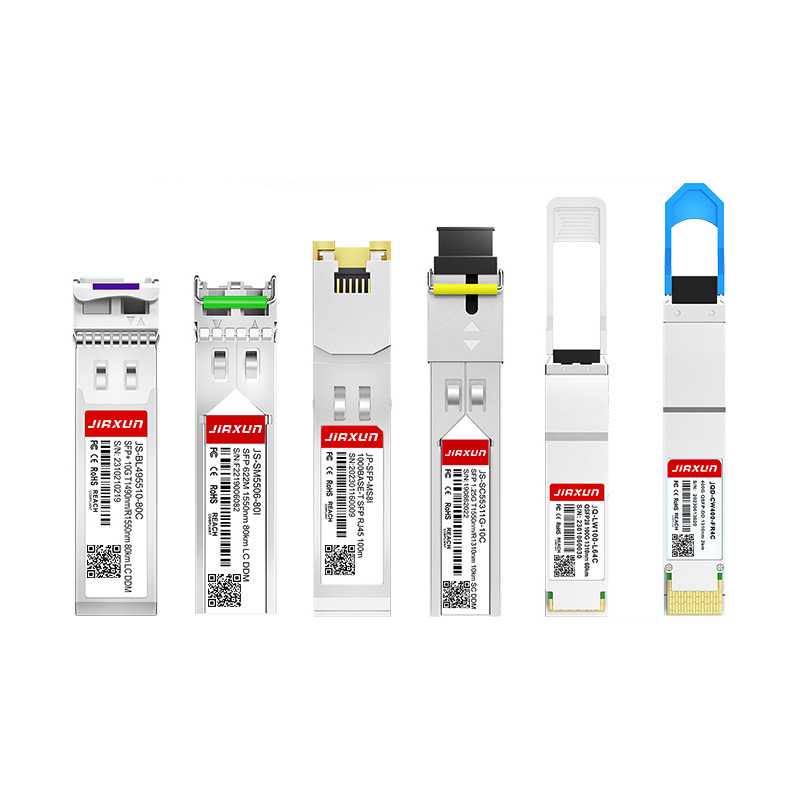
As global data traffic continues to grow rapidly, modern networks require faster and more efficient data transmission technologies. Optical transceivers play a critical role in fiber optic communication systems by converting electrical signals into optical signals for high-speed data transmission.
Complete Guide to SFP Modules and Optical Transceivers SFP, 10G SFP+, SFP28, QSFP28, QSFP-DD, 400G and 800G Modules Explained