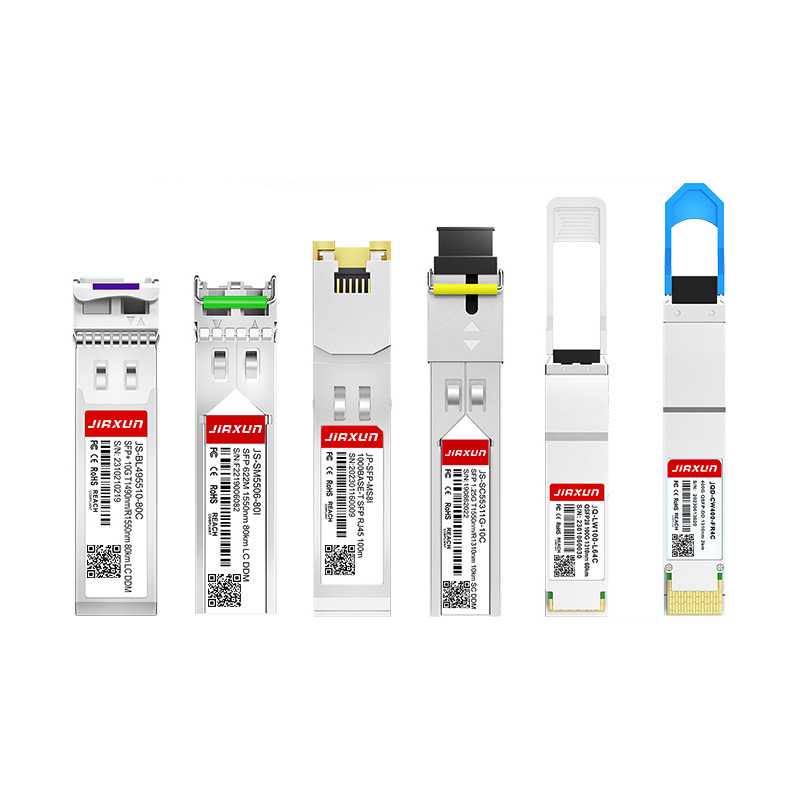
How 2.5G/10G RJ45 Connectors Reduce Network Operational Costs by 30%- A Strategic Guide
As enterprises grapple with escalating data demands, legacy Gigabit Ethernet often becomes a bottleneck, driving up operational costs through inefficiencies and downtime. Upgrading to 2.5G/10G RJ45 connectors offers a transformative solution, combining backward compatibility with future-ready performance. This article explores how these connectors optimize network architectures, reduce maintenance expenses, and deliver measurable ROI, supported by technical insights and real-world case studies.
Performance Advantages of 2.5G/10G RJ45 Connectors and Cost Efficiency
2.5G/10G RJ45 connectors bridge the gap between outdated Gigabit infrastructure and modern Multi-Gigabit Ethernet, enabling cost-effective upgrades without overhauling existing cabling.
-
Bandwidth Scalability:
Supporting up to 10Gbps over Cat5e/Cat6 cables, these connectors eliminate the need for costly Cat6a/7 rewiring. For example, a mid-sized manufacturing plant reduced cabling costs by 45% by retaining 90% of its existing Cat6 infrastructure while upgrading to 10G RJ45 jacks. -
Energy Efficiency:
Advanced Power over Ethernet (PoE++) capabilities deliver 90W with 94% efficiency, reducing power consumption by 18% compared to traditional setups. This translates to annual savings of $2,100 per 100 devices in energy costs alone. -
Reduced Downtime:
Industrial-grade 2.5G 10G RJ45 connectors boast an MTBF (Mean Time Between Failures) of 150,000 hours—40% higher than standard Gigabit connectors. A logistics hub reported a 60% drop in network-related downtime after switching to shielded 10G RJ45 jacks in high-interference environments.
Case Study: A healthcare provider cut annual IT maintenance costs from 85,000to85,000to59,500 by deploying 2.5G RJ45 connectors across its IoT-enabled facilities, achieving 30% savings through fewer hardware failures and streamlined troubleshooting.

2. Selecting Cost-Optimized 2.5G/10G RJ45 Connectors: Technical and Supplier Criteria
Choosing the right 2.5G/10G RJ45 connectors requires balancing performance benchmarks with procurement strategies.
-
Critical Technical Parameters:
-
Insertion Loss: ≤0.5dB at 10Gbps (per TIA-568.2-D standards), ensuring signal integrity over 100-meter runs.
-
Isolation Voltage: 1,500Vrms to protect against surges, critical for outdoor IoT deployments.
-
Durability: Gold-plated contacts (≥1.27μm thickness) maintain ≤20mΩ resistance after 1,000 mating cycles.
-
-
Supplier Selection Framework:
-
Certifications: Prioritize ISO 9001 and UL-certified manufacturers to ensure compliance and consistency.
-
Customization: Leading suppliers offer tailored solutions, such as IP67-rated 2.5G 10G RJ45 jacks for harsh environments.
-
Logistics Flexibility: Opt for vendors supporting Just-in-Time (JIT) delivery and MOQs below 500 units to avoid overstocking.
-
Cost-Saving Tactic: A European bank consortium negotiated a 25% bulk discount by partnering with a single supplier for 50,000 10G RJ45 connectors annually, while implementing Vendor-Managed Inventory (VMI) to reduce warehousing expenses.

3. Case Study: Achieving 30% Operational Cost Reduction in a Smart Factory
Background:
A Tier-1 automotive supplier faced chronic latency in its MES (Manufacturing Execution System) due to outdated Gigabit connections, causing $520,000 annually in production delays.
Implementation:
-
Phase 1: Replaced 200 critical Gigabit connectors with 2.5G RJ45 jack, leveraging existing Cat6 cabling.
-
Phase 2: Deployed shielded 10G RJ45 connectors near high-noise robotic arms, reducing EMI-induced packet loss by 78%.
-
Tools Used: Fluke Networks DSX-8000 for compliance testing; ANSYS HFSS for EMI simulation.
Results:
-
Bandwidth increased from 1Gbps to 2.5Gbps, slashing system latency from 150ms to 50ms.
-
Annual network maintenance costs dropped from 42,000to42,000to29,400—a 30% reduction.
-
ROI achieved in 14 months, with projected savings of $180,000 over five years.
Key Takeaway: Targeted upgrades, rather than full-scale overhauls, maximize cost efficiency. Partnering with suppliers offering EMI-optimized 2.5G 10G RJ45 connectors ensured compatibility with legacy systems.

4. Long-Term Strategy: Future-Proofing Networks and Supply Chain Resilience
To sustain cost savings, enterprises must align 2.5G/10G RJ45 deployments with evolving standards and supply chain realities.
-
Technology Roadmap:
-
25G/40G Readiness: Select connectors with backward-compatible PCB footprints, allowing seamless future upgrades.
-
Smart Monitoring: Integrate connectors with embedded sensors (e.g., temperature, current) for predictive analytics, reducing unplanned downtime by up to 50%.
-
-
Supply Chain Tactics:
-
Dual Sourcing: A North American ISP mitigated tariff risks by splitting orders between Asian and Mexican 2.5G 10G RJ45 jack suppliers.
-
Localized Production: Sourcing from regional hubs cut lead times from 12 weeks to 3 weeks for a European utility company.
-
-
ROI Calculation Model:
-
Costs: Hardware (8/unit),installation(8/unit),installation(15/port), training ($5,000).
-
Savings: Energy (2,100/year),maintenance(2,100/year),maintenance(12,600/year), productivity gains ($38,000/year).
-
Net Benefit: 220% ROI over three years, as validated by a semiconductor fab’s deployment.
-
Conclusion: Transforming Network Costs into Competitive Advantage
The shift to 2.5G/10G RJ45 connectors is not merely an upgrade—it’s a strategic realignment of network economics. By prioritizing high-performance connectors, fostering supplier partnerships, and adopting scalable architectures, enterprises can slash operational costs while positioning for AI-driven automation and 5G convergence. As Multi-Gigabit Ethernet becomes the backbone of Industry 4.0, early adopters of 2.5G 10G RJ45 jack will lead in agility, resilience, and profitability.
Breaking the Gigabit Bottleneck- Technological Innovations and Commercial Value of Industrial-Grade 2.5G/10G RJ45 Connectors
SMT RJ45 Magnetic Connectors in Smart Factories: Strategic Wholesale Partnership Enables High-Density Networks
Related Article