
How Ethernet Connector Manufacturers Construct the Digital Vessels of the Global Network with RJ45
2025-05-08
I. Overview of Ethernet Connectors: The Foundation of Network Connections
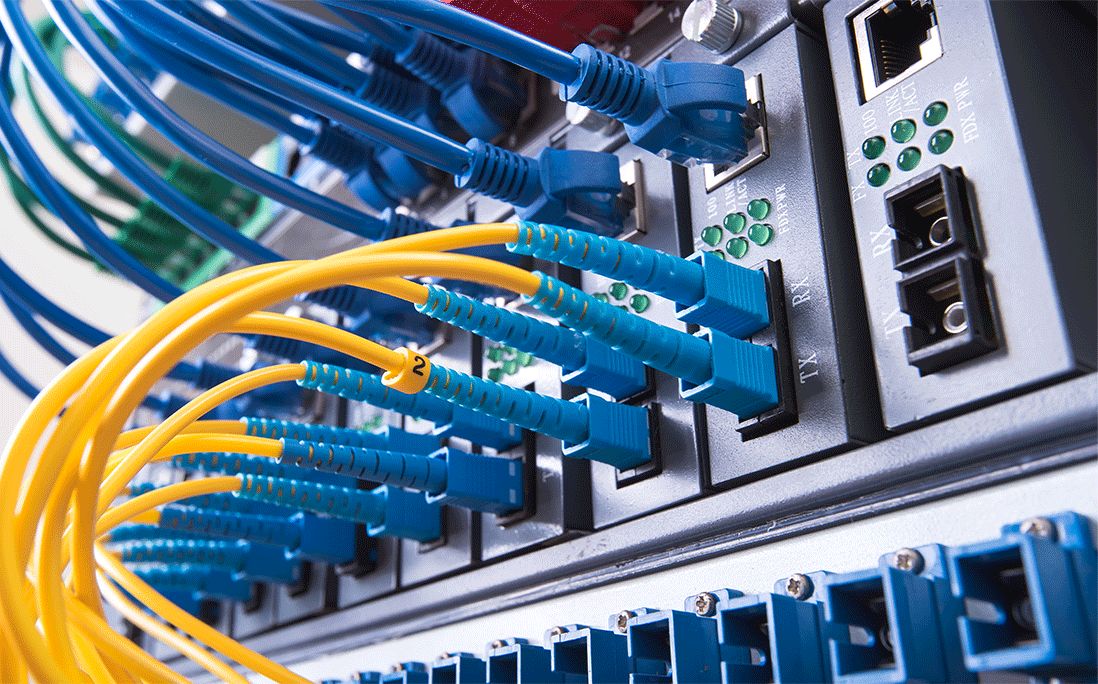
As a core component of network communication, the Ethernet connector is a key part for achieving the connection between devices such as computers, switches, and routers and the Ethernet, forming an important part of the physical layer of the Ethernet. Its working principle is to convert digital signals into physical signals for transmission. Commonly used transmission media include twisted pair wires and optical fibers, and the connection between devices is completed through the connection of plugs and sockets.
There is a rich variety of Ethernet connectors. Among them, the RJ45 Ethernet connector is the most common type, widely applied in various network scenarios. It usually has 8 wires, with 4 for sending data and 4 for receiving data, and it can support transmission speeds of 10/100/1000Mbps. According to different application environments, RJ45 connectors can be divided into UTP (Unshielded Twisted Pair) and STP (Shielded Twisted Pair). UTP is suitable for general office environments and is widely used due to its cost advantage. While STP is suitable for high-interference environments, providing more stable and reliable connections. In addition to RJ45 connectors, fiber optic connectors also play an important role in network connections. Common types include SC, ST, FC, LC, etc., which have the characteristics of strong anti-interference ability, high transmission rate, and long transmission distance. However, relatively speaking, they are more expensive and have stricter environmental requirements.

II. Applications of Ethernet Connectors: Network Support in Multiple Fields
In the field of computer networks, Ethernet connectors play a fundamental role. Whether it is the office network within an enterprise or the large-scale server clusters in data centers, Ethernet connectors are indispensable for connecting various devices to the Local Area Network (LAN) or Wide Area Network (WAN), enabling resource sharing, data transmission, and network communication. For example, in an enterprise office scenario, employees access the company network through the Ethernet connector on their computers to share files, print documents, send and receive emails, and ensure the efficient circulation of information within the enterprise.
Ethernet connectors are also essential in home networks. With the continuous popularization of smart home devices, devices such as smart TVs, smart speakers, and smart cameras require stable network connections to function properly. Ethernet connectors connect these devices to the switches or wireless routers in the home network, not only realizing the sharing of Internet connections but also enabling the interconnection of devices, creating a convenient smart home life for users. For instance, users can control the smart TV to play their favorite programs through the smart speaker, and behind this is the stable network support provided by Ethernet connectors.
In the industrial field, the demand for Ethernet connectors is also increasing. In the context of Industry 4.0 and intelligent manufacturing, devices such as automated production lines, sensors, and actuators in factories require real-time and stable data transmission. Ethernet connectors can meet this demand, connecting various industrial devices into an efficient network, realizing intelligent monitoring and management of the production process, improving production efficiency and product quality, and promoting industrial production to a higher level.

III. Production Processes of Ethernet Connectors: Assurance of Quality
The selection of raw materials is crucial for the performance of Ethernet connectors. The conductor part usually selects high-purity copper materials to ensure good electrical conductivity and signal transmission performance. Insulation materials need to have excellent electrical insulation performance, heat resistance, and mechanical properties. Common insulation materials include Polyvinyl Chloride (PVC), Polypropylene (PP), etc. For example, in the production of high-speed Ethernet connectors, special low-smoke and halogen-free insulation materials are selected to reduce signal attenuation and interference, thereby improving the performance of the connectors.
In terms of manufacturing processes, precision mold manufacturing is an important link in the production of Ethernet connectors. High-precision molds can ensure the dimensional accuracy and consistency of connectors, providing a good foundation for subsequent production. The stamping process is used to manufacture the metal components of connectors, such as pins and casings, and the stamping equipment is required to have high speed and precision to ensure the quality of products. The injection molding process is used to form the insulation components, and the injection molding temperature, pressure, and time need to be strictly controlled to ensure the molding quality of the insulation components.
In the assembly stage, strict quality control is the key to ensuring the performance of Ethernet connectors. Workers assemble the stamped metal components and injection-molded insulation components to ensure that the installation positions of all components are accurate. At the same time, automated detection equipment is used to conduct electrical performance tests on the assembled connectors, such as conductivity, insulation resistance, and insertion and extraction force. Only the products that pass the tests can enter the market, providing users with reliable network connection products.

IV. The Vital Role of Ethernet Connector Manufacturers: Industry Promoters
RJ45 Ethernet connector manufacturers and other various Ethernet connector manufacturers play a core role in the entire industrial chain. They not only need to continuously invest in research and development to improve product performance to meet the increasing requirements for network speed and stability but also need to strictly control the production quality to ensure that every connector leaving the factory meets the relevant standards.
With the development of the Internet of Things and Industry 4.0, the demand for miniaturized and highly reliable Ethernet connectors is constantly increasing, and manufacturers need to keep up with industry trends and adjust the production direction in a timely manner. For example, RJ45 Ethernet connector manufacturers need to continuously optimize product design and improve product performance and reliability to adapt to market demands. At the same time, manufacturers also need to closely cooperate with upstream and downstream enterprises, collaborate with raw material suppliers to ensure the stable supply of high-quality raw materials, jointly develop more advanced production equipment with equipment manufacturers, maintain good communication with customers, understand customer needs, and provide customized solutions, thus promoting the development and progress of the entire Ethernet connector industry.
In conclusion, Ethernet connector manufacturers, through the production and innovation of various connectors including RJ45, are just like constructing the “digital vessels” of the global network, providing a solid guarantee for the stable operation and development of network communication, and playing an irreplaceable role in the digital era.
Ethernet Connector- Jiaxun Smart Technology Elevating Network Connectivity to New Heights
The Ideal Choice for Precision Optical Connections Professional Optical Fiber Cage Manufacturer Offers High-Quality Solutions
Related Article

LAN Transformer vs Discrete Magnetics Guide | JIAXUN
LAN Transformer vs. Discrete Magnetics: Why Integrated RJ45 Connectors are Better for Modern Networking

Invitation | Jiaxun (Huizhou) Intelligent Technology Invites You to the 2026 Global Sources Consumer Electronics Show
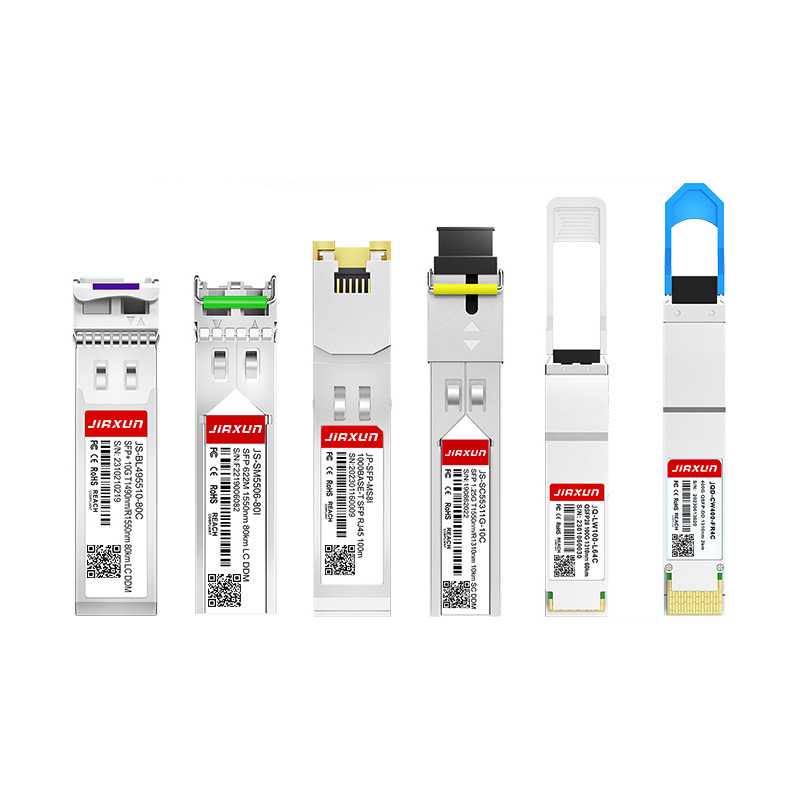
As global data traffic continues to grow rapidly, modern networks require faster and more efficient data transmission technologies. Optical transceivers play a critical role in fiber optic communication systems by converting electrical signals into optical signals for high-speed data transmission.
Complete Guide to SFP Modules and Optical Transceivers SFP, 10G SFP+, SFP28, QSFP28, QSFP-DD, 400G and 800G Modules Explained