
How Shielded RJ45 Connectors Protect Against EMI/RFI Interference
2025-06-09
In an era where seamless network connectivity is the backbone of global business operations, the integrity of data transmission cannot be overstated. For industries ranging from manufacturing to healthcare, even minor disruptions in network performance can lead to costly downtime and compromised productivity. One often underestimated yet critical component in maintaining network reliability is the humble RJ45 connector. Specifically, shielded RJ45 connectors have emerged as a cornerstone solution for combating electromagnetic interference (EMI) and radio-frequency interference (RFI), two primary culprits behind signal degradation and network instability.
The Pervasive Threat of EMI/RFI Interference
EMI and RFI are electromagnetic waves that disrupt the normal flow of electrical signals in network cables. These interferences originate from various sources: industrial machinery, power lines, wireless transmitters, and even other nearby data cables. In unshielded networks, these waves can induce noise in the data transmission, leading to bit errors, reduced bandwidth, and complete signal loss in severe cases. For instance, a study by the Institute of Electrical and Electronics Engineers (IEEE) found that in industrial environments with heavy machinery, unshielded Cat6 cables experienced up to 30% more signal degradation compared to their shielded counterparts over a 24-hour period.
The impact of such interference extends beyond mere performance issues. In mission-critical applications like healthcare monitoring systems or autonomous manufacturing lines, unreliable connectivity can pose safety risks and regulatory compliance challenges. Moreover, as networks transition to higher speeds (such as 10Gbps and beyond), the sensitivity to EMI/RFI increases, making robust shielding solutions non-negotiable.

How Shielded RJ45 Connectors Combat Interference
Shielded RJ45 connectors, also known as shielded RJ45 Ethernet connectors, are designed with specialized features to create a barrier against electromagnetic interference. The core of their effectiveness lies in their multi-layer shielding structure, typically composed of a combination of tinned copper braid and aluminum foil. This shielding acts as a Faraday cage, redirecting interfering electromagnetic fields to ground and preventing them from penetrating the inner conductors of the cable.
Unlike unshielded RJ45 connectors, which rely solely on the cable’s insulation for protection, shielded variants establish a continuous grounding path from the connector to the network infrastructure. This grounding mechanism is crucial: when properly installed, the shielded RJ45 Ethernet connector ensures that any induced electromagnetic noise is safely dissipated, rather than affecting the data signals. Manufacturers often employ precision engineering in the connector’s design, such as ensuring 360-degree metal contact between the shield and the cable’s armor, to minimize gaps that could allow interference leakage.
Another key advantage lies in the connector’s compatibility with shielded Ethernet cables. When used in conjunction with Cat5e, Cat6, or Cat6a shielded cables, the entire transmission path becomes a unified shielded system, drastically reducing the risk of crosstalk (interference between adjacent wires) and external EMI/RFI. This synergy is particularly vital in high-speed networks where signal integrity over long distances is essential.

Real-World Applications and Benefits
The practical advantages of shielded RJ45 connectors manifest across diverse industries, each facing unique interference challenges. In industrial automation, where factories are filled with high-voltage motors, robotic arms, and wireless sensors, shielded connectors play a pivotal role in maintaining stable communication between programmable logic controllers (PLCs) and remote monitoring systems. A case study by a leading automotive manufacturer showed that upgrading to shielded RJ45 connectors in their assembly line networks reduced unplanned downtime by 42%, translating to annual savings of over $250,000.
Data centers, too, benefit immensely from shielded solutions. With thousands of servers and switches operating in close proximity, the electromagnetic environment is highly congested. Shielded RJ45 Ethernet connectors here ensure that high-speed data transfers (such as those required for cloud computing and big data analytics) remain error-free, even in densely packed server racks. Additionally, the shielding helps mitigate the “ground loop” problem, where potential differences between equipment cause unwanted currents that degrade signal quality.
In the healthcare sector, where medical devices must operate flawlessly without interfering with each other, shielded connectors are essential. MRI rooms, for example, generate strong electromagnetic fields that could disrupt unshielded network connections in patient monitoring devices. By using shielded RJ45 connectors, hospitals ensure that vital signs are transmitted accurately, supporting timely and effective patient care.

Key Considerations When Choosing Shielded RJ45 Connectors
Selecting the right shielded RJ45 connector requires evaluating several technical specifications to match the application’s needs. First and foremost is the connector’s compatibility with the cable category. A shielded RJ45 connector designed for Cat6a cable will support higher bandwidths (up to 500MHz) and faster data rates than one intended for Cat5e, making it suitable for future-proofing networks.
Environmental ratings are another critical factor. For outdoor or harsh industrial environments, connectors with IP67 ratings (dust-tight and water-resistant) combined with shielding offer optimal protection. Additionally, some shielded connectors feature snagless boots to prevent damage during installation, further enhancing reliability.
Proper installation is equally important. Even the best shielded RJ45 connector will fail to perform if not grounded correctly. Installers must ensure that the shield is securely connected to the cable’s shielding layer and that the entire system (connectors, cables, and patch panels) is grounded to a common point. Many manufacturers provide detailed installation guides and training to ensure optimal performance.

Conclusion: A Strategic Investment in Network Resilience
In an interconnected world where data is the lifeblood of businesses, the role of shielded RJ45 connectors in maximizing network reliability cannot be overemphasized. By effectively countering EMI/RFI interference, these connectors safeguard signal integrity, reduce maintenance costs, and minimize downtime. Whether in industrial settings, data centers, or healthcare facilities, the investment in high-quality shielded RJ45 Ethernet connectors proves to be a wise choice for organizations seeking to build robust, future-ready network infrastructures.
As technology continues to advance toward faster data speeds and more complex networking environments, the demand for reliable shielding solutions will only grow. By prioritizing shielded RJ45 connectors, businesses can ensure that their networks not only meet current performance requirements but also stand ready to tackle the challenges of tomorrow’s digital landscape. In the quest for uninterrupted connectivity, shielding is not just a feature—it’s a necessity.
8-Pin RJ45 Connectors for 5G, AI, and Autonomous Vehicles
RJ45 Connector Wiring Diagram
Related Article

LAN Transformer vs Discrete Magnetics Guide | JIAXUN
LAN Transformer vs. Discrete Magnetics: Why Integrated RJ45 Connectors are Better for Modern Networking

Invitation | Jiaxun (Huizhou) Intelligent Technology Invites You to the 2026 Global Sources Consumer Electronics Show
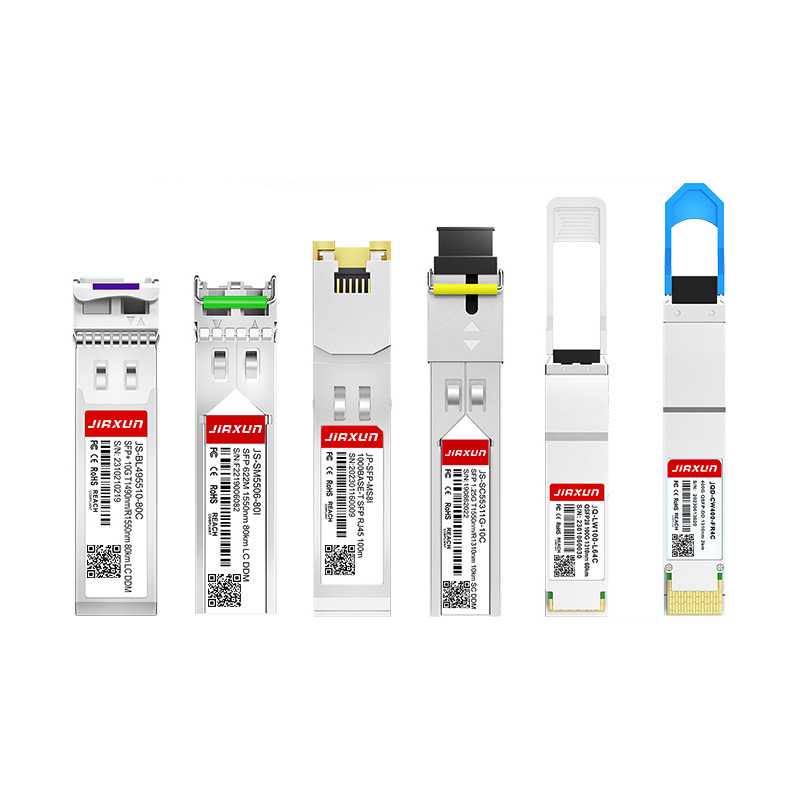
As global data traffic continues to grow rapidly, modern networks require faster and more efficient data transmission technologies. Optical transceivers play a critical role in fiber optic communication systems by converting electrical signals into optical signals for high-speed data transmission.
Complete Guide to SFP Modules and Optical Transceivers SFP, 10G SFP+, SFP28, QSFP28, QSFP-DD, 400G and 800G Modules Explained