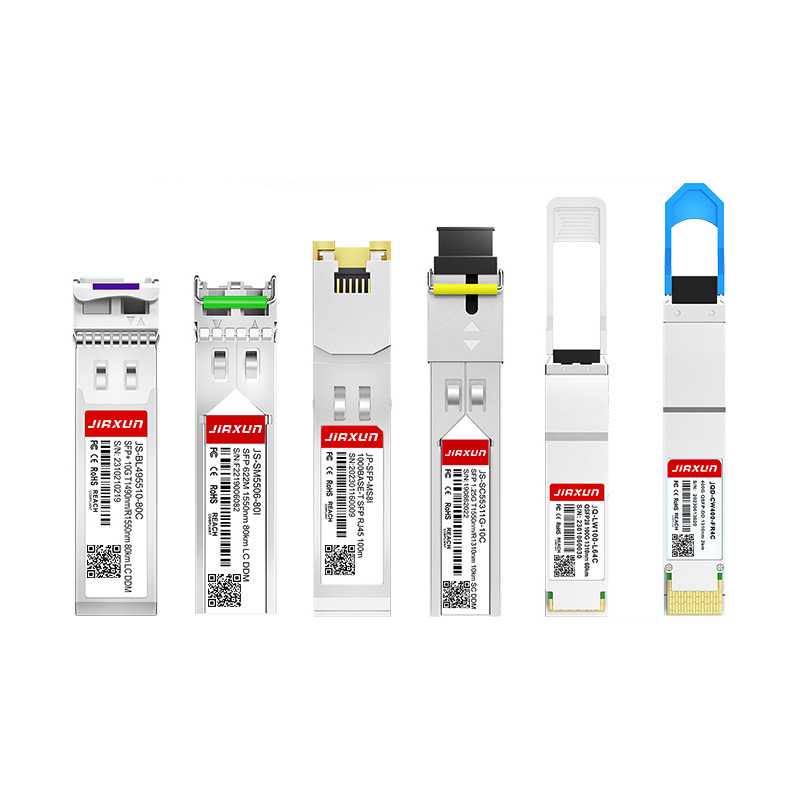
How to Choose the Right Optics Transceiver Module for Your Network
In today’s hyperconnected world, high-speed and reliable data transmission is the backbone of enterprise networks, telecom carriers, and large-scale data centers. From 5G infrastructure to cloud computing, demand for bandwidth continues to grow, and with it, the need for advanced Optics Transceiver Modules.
Selecting the right optics transceiver is no longer just a technical decision—it’s also a strategic investment that impacts performance, scalability, and operating costs. This guide explains how to choose the right optics transceiver module for your network, highlights key factors to consider, and provides recommended solutions trusted by global customers.

Understanding the Basics of Optics Transceiver Modules
An Optics Transceiver Module is a compact, pluggable device that converts electrical signals into optical signals and back again. Installed in switches, routers, or network interface cards, these modules enable high-speed data transmission over fiber optic cables.
Common Standards and Types
-
SFP (Small Form-Factor Pluggable): Supports 1G data rates, widely deployed in enterprise networks.
-
SFP+: An enhanced version of SFP, supporting 10G speeds.
-
SFP28: Designed for 25G data rates, now a mainstream choice in cloud data centers.
-
QSFP/QSFP28: Multi-lane modules supporting 40G/100G transmission.
-
CFP/CFP2: Used in high-capacity backbone networks.
-
BiDi Transceivers: Enable bidirectional transmission over a single fiber, reducing infrastructure cost.
These modules follow industry standards such as IEEE and MSA, ensuring interoperability across different vendors’ equipment.
Key Factors to Consider When Choosing an Optics Transceiver Module
1. Data Rate and Bandwidth
Your optics module must match your network’s required data rate. For example:
-
1G SFP – Entry-level enterprise connectivity.
-
10G SFP+ – Suitable for mid-to-large enterprises and data centers.
-
25G SFP28 – Increasingly adopted in modern cloud networks.
-
40G/100G QSFP – Required for large-scale data centers and backbone networks.
2. Transmission Distance and Fiber Type
-
Single-Mode Fiber (SMF): Supports long-distance transmission (10km–120km).
-
Multi-Mode Fiber (MMF): More cost-effective for short distances (≤550m).
3. Connector Types and Compatibility
-
LC, SC, and MPO are the most common connectors.
-
Always check compatibility with your switch or router to avoid costly mismatches.
4. Power Consumption and Heat Dissipation
In high-density environments, energy-efficient transceivers help lower cooling and power costs.
5. Vendor Reliability and Certification
Look for suppliers that provide:
-
RoHS, CE, FCC certifications
-
Proven interoperability with major vendors (Cisco, Juniper, Huawei, etc.)
-
Compatibility testing reports

Common Types of Optics Transceiver Modules and Their Applications
-
SFP/SFP+: Cost-effective for enterprise and telecom environments.
-
QSFP28: Designed for 100G networking, used in hyperscale data centers.
-
BiDi Modules: Efficient for fiber-limited environments.
-
25G SFP28: Ideal for bandwidth-hungry applications such as AI and cloud computing.
Why Choose Our Optics Transceiver Modules?
When upgrading a network, the supplier you choose matters just as much as the module itself. Our company provides a wide range of Optics Transceiver Modules trusted by enterprises, ISPs, and data centers worldwide.
1. Broad Compatibility with Major Brands
Our modules are tested with Cisco, Juniper, Huawei, and other global equipment vendors. This ensures seamless integration without the cost premium of OEM-only optics.
2. High Performance at Lower Cost
We deliver OEM-level quality at prices up to 40% lower than branded optics. This allows you to maximize network ROI while maintaining performance and reliability.
3. Strict Quality Assurance
Every transceiver undergoes rigorous testing for:
-
Signal integrity
-
Temperature stability
-
Power consumption
Certified under RoHS, CE, FCC, our modules meet international standards.
4. Future-Proof Network Solutions
From 1G SFP to 25G SFP28 and 100G QSFP28, we offer a complete product line that scales with your network growth.
5. Dedicated Support and Fast Delivery
Our engineers provide pre-sales consulting and after-sales technical support. With strong inventory and logistics, we ensure quick shipping for urgent deployments.

Featured Product Lineup
1. JS-SM5510-A2C
-
Duplex LC SMF Optical Transceiver
-
1550nm 10G SFP+ Single Mode, up to 120km
-
Perfect for long-haul enterprise and telecom applications
-
Compatible with Juniper 10G SFP+ 40km networks
2. JS-SM552G-80C
-
2.5GB MiniGBIC SFP Ethernet Module
-
Designed for Datacom and Telecom
-
Compatible with Cisco 10G SFP+ Module 40km
-
Ensures stable mid-range connectivity
3. GLC-BX40-U / GLC-BX40-D
-
10/100/1000BASE-SX 1.25G SFP Ethernet Module
-
850nm, 550m Duplex LC MMF Transceiver
-
Widely used in FTTH deployments and access networks
4. JS-BL332710-60C
-
1330nm-TX/1270nm-RX Simplex LC Single Mode
-
10G BiDi SFP+ Module, up to 60km reach
-
Reduces fiber costs by enabling bidirectional transmission
5. JS-SM3125-30C
-
25G SFP28 30km DDM Dual LC Transceiver
-
1310nm Single Mode design
-
Ideal for next-generation data center networks
? Our optics transceiver modules combine OEM-level quality, global compatibility, and cost efficiency—making them the preferred choice for enterprises, ISPs, and system integrators.
Practical Buying Guide
-
OEM vs Compatible Modules: OEM modules guarantee compatibility but come at high cost. High-quality compatible modules provide equal reliability at a lower price.
-
Verify Compatibility: Always cross-check your switch/router compatibility list.
-
Budget Planning: Consider future upgrades (e.g., from 10G to 25G or 100G) to avoid costly replacements.
Future Trends in Optics Transceiver Modules
-
400G/800G Modules: Becoming the standard in hyperscale data centers.
-
Green Optics: Lower power consumption and eco-friendly designs are in demand.
-
AI & Cloud Growth: Driving the adoption of higher-speed optics to handle massive data processing.
Frequently Asked Questions (FAQ)
Q1: What is the difference between single-mode and multi-mode optics transceiver modules?
A: Single-mode modules support long distances (up to 120km), while multi-mode modules are cheaper and effective for short ranges (≤550m).
Q2: Can I use third-party optics transceivers safely?
A: Yes. High-quality third-party optics are reliable, fully compatible, and much more cost-effective compared to OEM versions.
Q3: How do I confirm compatibility with my switch or router?
A: Check the vendor’s compatibility list or request a compatibility test report from your supplier.
Q4: What is the typical lifespan of an optics transceiver?
A: Usually 5–10 years, depending on operating conditions and product quality.
Q5: Which optics transceiver module is recommended for a data center upgrade?
A: For modern upgrades, 25G SFP28 or 100G QSFP28 modules are recommended to balance performance and cost.
Conclusion
Selecting the right Optics Transceiver Module is essential for building a scalable, cost-efficient, and future-ready network. By considering factors like data rate, distance, compatibility, and vendor reliability, enterprises can avoid bottlenecks and optimize network investment.
Our product lineup — ranging from 10G SFP+ to 25G SFP28 and advanced BiDi solutions — delivers the performance and flexibility required for today’s enterprise, telecom, and data center applications. With certified quality, proven compatibility, and cost savings, our optics transceiver modules are the ideal choice for businesses looking to upgrade their networks.
The Ultimate SFP Module Buying Guide: Compatibility, Price, and Performance
What is an RJ45 Connector? A Comprehensive Guide for Beginners
Related Article