In-depth analysis: Uncovering the blind spots in choosing RJ45 and RJ11 connectors
2025-06-16
When deploying enterprise informatization and intelligent devices, the choice of network connector often determines system stability and transmission efficiency. As the two most common interface types, RJ45 and RJ11 are often confused due to their similar appearance, leading to device compatibility issues and performance bottlenecks. This article provides a professional analysis from the perspectives of technical principles, application scenarios, and performance parameters to help you accurately avoid selection pitfalls and improve network architecture reliability.
Essential differences in physical structure and interface standards
From a hardware design perspective, RJ45 Ethernet connectors adopt an 8-position 8-conductor (8P8C) structure with terminal arrangements following T568A/T568B standards. They are compatible with 4-pair twisted-pair cables (8 cores), featuring a 14mm interface width suitable for high-speed data transmission. In contrast, RJ11 jacks typically use 6-position 4-conductor (6P4C) or 6-position 2-conductor (6P2C) designs, supporting only 2-pair (4-core) or 1-pair (2-core) cables with a 10mm interface width, primarily for voice signal transmission.
This structural disparity results in incomplete compatibility: while forcing an RJ11 plug into an RJ45 Ethernet Jack may achieve physical connection, it causes pin misalignment and poor contact; conversely, the larger RJ45 plug cannot fit into RJ11 interfaces.
In terms of industrial standards, RJ45 complies with IEEE 802.3 Ethernet specifications, supporting transmission rates from 10Mbps to 10Gbps to meet modern bandwidth requirements. RJ11 follows ITU-T T.50 standards for PSTN telephone networks, with a maximum rate of just 56kbps, representing a generational gap in electrical characteristics and protocol support.

Precise Positioning of Core Application Scenarios
(A) Typical Applications of RJ45 Ethernet Connectors
In enterprise network environments, RJ45 Ethernet Jacks serve as standard configurations for core devices like switches, routers, and servers, enabling high-speed data exchange in LAN/WAN networks. For example, in smart factory deployments, industrial-grade RJ45 Ethernet connectors with IP67 protection withstand harsh environments (dust, moisture), ensuring stable communication between PLC devices and host computers. In data centers, 10Gbps RJ45 Modular Jack paired with Cat6a cables achieve low-latency, reliable data transfer for cloud computing and big data processing.
(B) Traditional Domains of RJ11 Interfaces
RJ11 jacks are mainly used in analog telephone systems, fax machines, and legacy modems for voice signal transmission. They can still be found in hotel rooms and office receptions for landline connections. However, with VoIP technology adoption, traditional RJ11 applications are shrinking, remaining only in specific legacy systems.

Key Evaluation Factors for Selection Decisions
(A) Transmission Requirement Matching
For projects involving Ethernet communication (IP cameras, industrial IoT networking), RJ45 Ethernet connectors are mandatory, with category selection (Cat5e/Cat6/Cat6a) based on bandwidth needs. Incorrect RJ11 selection leads to critical issues: a manufacturing company experienced frequent device disconnections when deploying POE-powered cameras with RJ11 cables, caused by insufficient bandwidth affecting power and data stability.
(B) Device Compatibility Consideration
During equipment selection, verify port types carefully: RJ45 Jack on server motherboards support Auto-Negotiation, while RJ11 can only transmit analog signals. For integrated devices (multifunction printers, smart switches), confirm WAN/LAN port specifications to avoid hardware waste from interface mismatches.
(C) Environmental Adaptability Requirements
Industrial RJ45 Ethernet connectors often feature shielded metal enclosures (STP) to resist electromagnetic interference (EMI), ideal for high-interference environments like smart manufacturing and traffic monitoring. RJ11 interfaces, typically unshielded, offer weak EMI resistance, suitable only for home or low-interference scenarios.

Selection Myths and Solutions
(A) Common Misconceptions
- "Smaller interface means less space occupation" – While physically smaller, RJ11 cannot support high-speed data, potentially causing performance bottlenecks in network devices when compact design is prioritized excessively.
- "Universal connectors work for both interfaces" – So-called "RJ45/RJ11 universal modules" are transitional solutions; long-term use may cause signal attenuation due to contact impedance changes, not recommended for critical links.
(B) Professional Selection Guidelines
- Prioritize business needs – Choose RJ45 Ethernet connectors for data transmission; consider VoIP solutions to replace traditional RJ11 for voice services.
- Adhere to standardization – Source IEEE-certified RJ45 products to ensure compatibility with e.g., H3C, Huawei, which strictly follow RJ45 specifications.
- Plan for future scalability – Reserve RJ45 Jacks in cabling projects to support future upgrades (5G, Wi-Fi 6), avoiding redeployment costs.
Conclusion
Correctly distinguishing between RJ45 and RJ11 interfaces is a fundamental technical decision in network architecture planning. During intelligent transformation or equipment procurement, enterprises should evaluate across transmission performance, device compatibility, and environmental adaptability to avoid systemic risks from incorrect selections. Choosing IEEE-compliant RJ45 Ethernet connectors not only ensures current operational stability but also lays a solid foundation for future digital upgrades. Through professional selection and standardized deployment, network connections can truly become a reliable cornerstone for efficient enterprise operations.
Data Center RJ45 Connector: The Core Hub of Network Architecture
How 10G RJ45 Ethernet Connectors Overcome Industrial Ethernet Transmission Bottlenecks: A Comprehensive Guide to Selection and Deployment
Related Article

LAN Transformer vs Discrete Magnetics Guide | JIAXUN
LAN Transformer vs. Discrete Magnetics: Why Integrated RJ45 Connectors are Better for Modern Networking

Invitation | Jiaxun (Huizhou) Intelligent Technology Invites You to the 2026 Global Sources Consumer Electronics Show
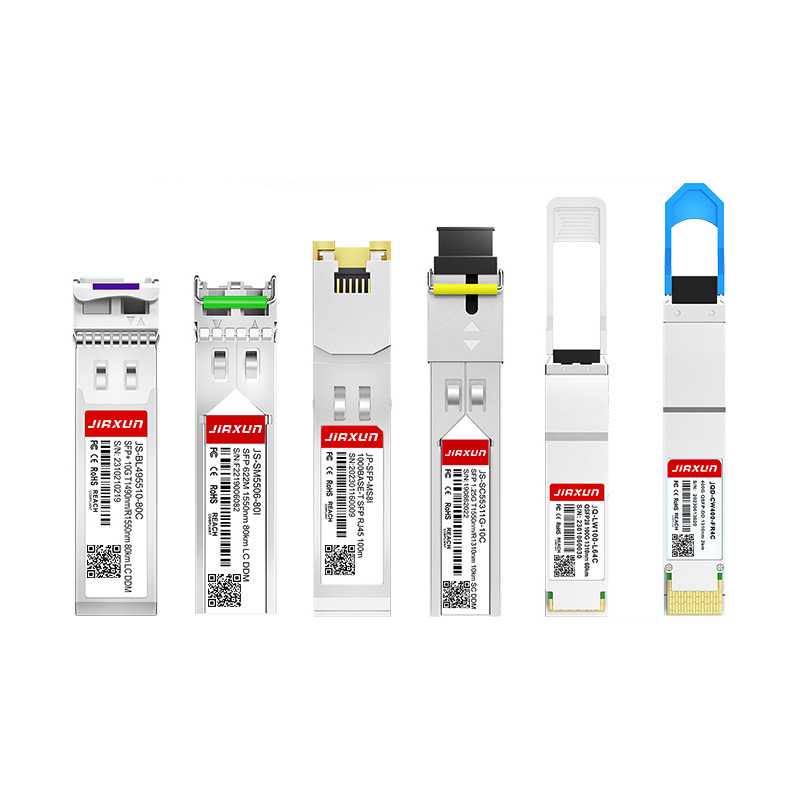
As global data traffic continues to grow rapidly, modern networks require faster and more efficient data transmission technologies. Optical transceivers play a critical role in fiber optic communication systems by converting electrical signals into optical signals for high-speed data transmission.
Complete Guide to SFP Modules and Optical Transceivers SFP, 10G SFP+, SFP28, QSFP28, QSFP-DD, 400G and 800G Modules Explained