
Integrated vs. Separate RJ45 Ethernet Connectors: Balancing Development Efficiency and Cost
2025-06-16
Core Differences: Integrated LAN Transformers vs. Flexible Separate Configuration
The primary distinction between the two lies in the integration of LAN Transformers. Integrated RJ45 Ethernet Connectors, such as TRXCOM's TRJ45 series, embed the LAN Transformer directly into the connector body through one-piece injection molding. This "2-in-1" modular design integrates 10/100/1000Mbps LAN Transformers with the connector housing, allowing direct surface-mount soldering during PCB layout and eliminating the need for independent transformer wiring in traditional separate solutions.
Separate solutions, represented by Trxcom Electronics' connectors, use independent RJ45 Ethernet Connectors and LAN Transformers. Engineers must manually match transformer models and layout connections, typically via cables or direct links. This approach excels in flexibility, enabling customized component selection for high-frequency transmission, EMC protection, and other specialized scenarios.

Development Efficiency: Integrated Solutions Shorten Cycle by 30%
Integrated solutions offer significant time-saving benefits. Testing by a leading smart factory equipment manufacturer shows that PCB design cycles for integrated RJ45 Ethernet Connectors are 30% shorter than separate solutions, attributed to:
- Simplified PCB Layout: Built-in transformers save 40% of wiring space, particularly critical for high-density industrial control motherboards where long-distance transformer-connector traces in separate solutions often cause signal attenuation.
- Streamlined Material Management: Combining connector and transformer into a single part number reduces procurement lead time from 45 days to 25 days on average, while lowering inventory management costs.
- Automated Soldering Process: Fully automated SMT (surface-mount technology) compatibility minimizes risks of manual soldering misalignment, a common issue in separate solutions.
Separate solutions demand higher engineering expertise. Independent transformer matching requires additional signal integrity (SI) and electromagnetic compatibility (EMC) testing. In 10Gbps high-speed transmission scenarios, engineers may spend 2-3 extra weeks adjusting transformer inductance and capacitance to meet IEEE 802.3 standards.

Cost-Performance Trade-off: Integrated for Mid-Low End, Separate for High-End
While integrated solutions have 15%-20% higher unit costs, their total cost of ownership (TCO) is more favorable. For a consumer router manufacturer producing 100,000 units annually, integrated solutions reduce assembly costs by 12% and after-sales return rate by 9% due to fewer failure points. They are ideal for cost-sensitive applications requiring ≤1Gbps transmission, such as home routers and IP cameras.
Separate solutions shine in high-end scenarios:
- High-Speed Transmission: In 2.5G/5GBASE-T industrial Ethernet devices, replacing with high-frequency LAN Transformers (e.g., Coilcraft's DS3215 series) reduces signal loss by 15% compared to integrated alternatives.
- Customized Protection: In extreme industrial environments (-40°C to 85°C), potted transformers paired with IP67-rated RJ45 Ethernet Connectors meet IEC 61000-4 EMC standards.
- Flexible Upgrades: Upgrading from 1Gbps to 10Gbps only requires replacing the transformer and connector, cutting hardware upgrade costs by 40% without redesigning the PCB.

Selection Guidelines from Manufacturers
RJ45 Ethernet Connector manufacturers recommend evaluating three key factors:
- Transmission Speed: Prioritize integrated solutions for ≤1Gbps; consider separate solutions for ≥2.5Gbps.
- Development Resources: Choose integrated for small teams or rapid-prototyping projects; leverage separate solutions' customization for complex enterprise applications.
- Certification Compliance: Integrated solutions, pre-certified by manufacturers for CE, FCC, etc., save 30% testing time for globally marketed products.
Industry experts note that as the 802.3bz 2.5GBASE-T standard gains traction, integrated solutions are expanding from consumer to industrial sectors, while separate solutions maintain dominance in high-speed fields like AI servers and 5G small cells. The two approaches will coexist to drive continuous innovation in network connectivity.
Conclusion
Whether for mass-produced consumer electronics or high-performance industrial equipment, the choice between integrated and separate RJ45 Ethernet Connectors hinges on balancing development efficiency with technical requirements. Partnering with professional manufacturers to evaluate application-specific needs ensures optimal reliability, cost, and performance – the cornerstone of competitive hardware design in today's connected world.
How 10G RJ45 Ethernet Connectors Overcome Industrial Ethernet Transmission Bottlenecks: A Comprehensive Guide to Selection and Deployment
Master RJ45 Connector Pinouts: The Ultimate Guide to T568A vs T568B Wiring
Related Article

LAN Transformer vs Discrete Magnetics Guide | JIAXUN
LAN Transformer vs. Discrete Magnetics: Why Integrated RJ45 Connectors are Better for Modern Networking
Invitation | Jiaxun (Huizhou) Intelligent Technology Invites You to the 2026 Global Sources Consumer Electronics Show
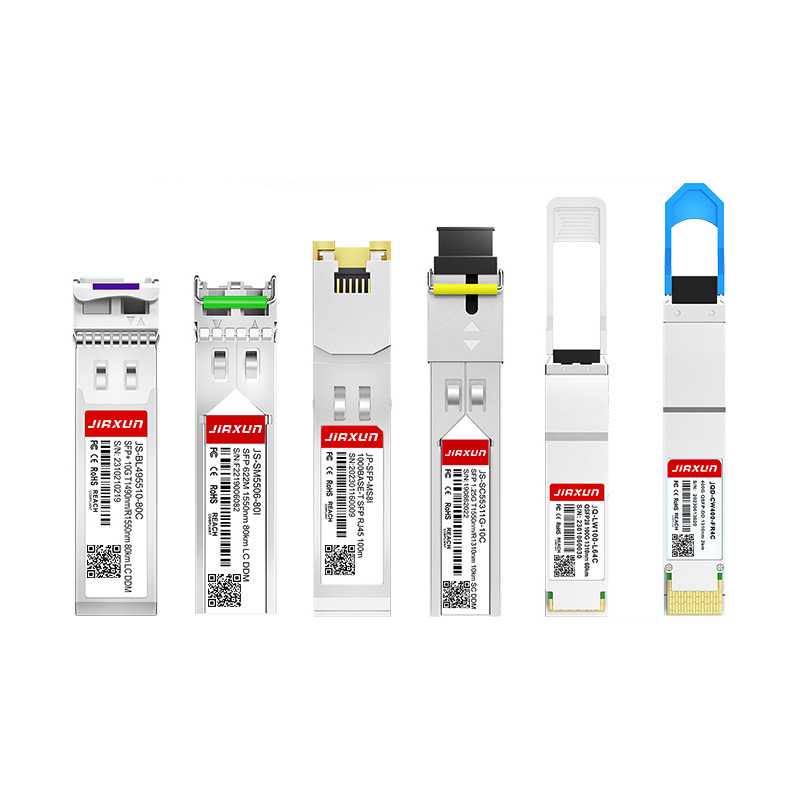
As global data traffic continues to grow rapidly, modern networks require faster and more efficient data transmission technologies. Optical transceivers play a critical role in fiber optic communication systems by converting electrical signals into optical signals for high-speed data transmission.
Complete Guide to SFP Modules and Optical Transceivers SFP, 10G SFP+, SFP28, QSFP28, QSFP-DD, 400G and 800G Modules Explained