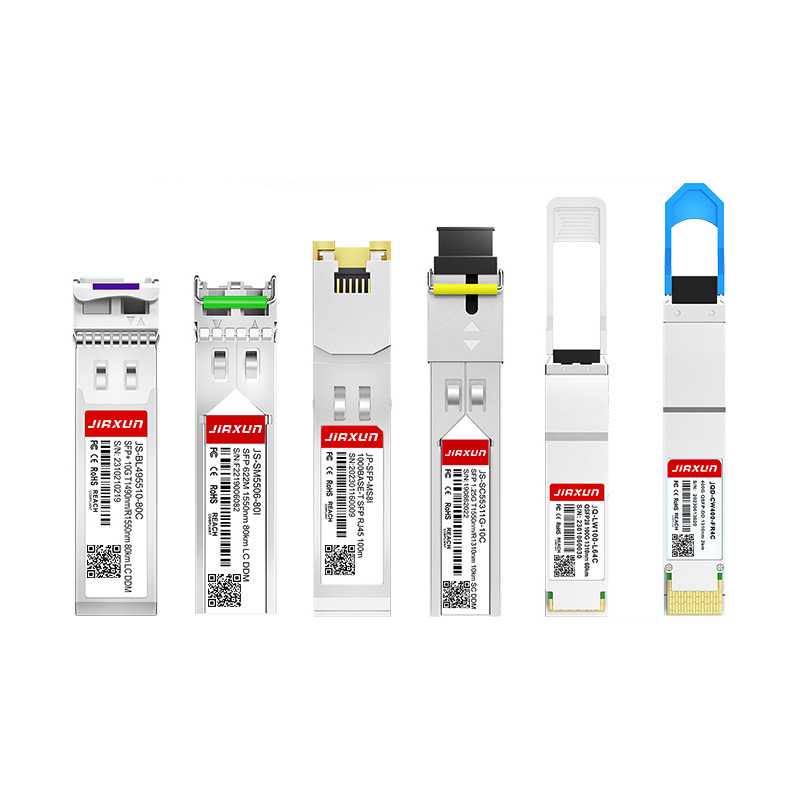
OEM SFP Cage Manufacturer: Inside the Manufacturing Process and Custom Design Capabilities
Introduction
In modern high-speed communication systems, the SFP cage plays a vital role in ensuring stable signal transmission and heat dissipation for SFP, SFP+, and SFP28 modules. As network devices continue to evolve, choosing a reliable OEM SFP cage manufacturer becomes a key factor for product performance and long-term reliability.
This article provides a deep look into how an SFP cage is designed and manufactured, what materials are used, and how leading factories ensure precision, consistency, and customization for global clients.

What Is an SFP Cage and Why It Matters
An SFP cage is a metal housing designed to hold and shield an SFP (Small Form-Factor Pluggable) transceiver module on a PCB. Its main functions include:
-
EMI shielding: Prevents electromagnetic interference and signal loss.
-
Mechanical protection: Provides stability during insertion and removal cycles.
-
Thermal management: Helps dissipate heat to ensure module longevity.
-
Modular compatibility: Designed to fit various SFP/SFP+/SFP28 connectors and transceivers.
In essence, the quality of an SFP cage directly influences the signal integrity, system reliability, and overall product performance.
The OEM SFP Cage Manufacturing Process
1. Material Selection
Most SFP cages are made from high-conductivity copper alloy or stainless steel with nickel or tin plating. Material selection affects both EMI performance and mechanical durability.
High-quality manufacturers use certified raw materials to meet RoHS and REACH compliance standards, ensuring environmental safety and product longevity.
2. Precision Stamping
Using advanced progressive stamping equipment, each SFP cage is formed with micro-level accuracy.
Automated stamping ensures consistent dimensional tolerance (±0.02mm), which is critical for high-speed network performance.
3. Surface Treatment
After stamping, surface plating (nickel, tin, or customized coatings) is applied to enhance conductivity and corrosion resistance.
Some OEMs also offer black nickel plating for aesthetic or thermal optimization.
4. Assembly and Spot Welding
For multi-port cages (1x2, 1x4, or 2x6 configurations), components are assembled using high-precision jigs and spot-welding robots to maintain alignment and mechanical strength.
5. Quality Inspection
Each SFP cage undergoes rigorous testing:
-
Dimensional inspection
-
Contact resistance measurement
-
EMI shielding verification
-
Thermal cycle and vibration testing
These steps ensure each cage meets international standards such as IEEE 802.3, Molex, or TE Connectivity compatibility.

OEM & Custom Design Capabilities
Leading SFP cage manufacturers provide a full range of OEM/ODM customization services, including:
-
Custom port configurations: Single, dual, quad, and stacked designs.
-
Tailored mechanical structures: For high-density switches, routers, and data centers.
-
Thermal optimization: Integrated ventilation or enhanced heat dissipation structures.
-
EMI performance enhancement: Specialized shielding layers or materials.
-
Logo engraving and part labeling: For private-label or brand-specific needs.
By offering these customization options, manufacturers enable clients to create networking products optimized for signal integrity, compact size, and system efficiency.
Why Partner with a Professional SFP Cage Manufacturer
Choosing the right SFP cage manufacturer is not only about price — it’s about consistency, reliability, and engineering expertise.
A professional factory provides:
-
In-house tooling design and development
-
Automated production lines for mass precision output
-
Experienced R&D engineers for mechanical and signal design
-
Strict QC systems compliant with ISO9001 and UL standards
-
Fast prototyping and OEM customization support
Such capabilities help clients reduce development time and ensure product compatibility with leading optical modules and connectors.

Conclusion
As network speeds advance toward 10G, 25G, and beyond, the role of high-quality SFP cages becomes even more critical.
Partnering with an experienced OEM SFP cage manufacturer ensures you receive not only precise mechanical components but also technical support, customization, and reliability that elevate your product’s competitiveness in the market.
If you’re seeking a trusted SFP cage supplier or OEM partner, choose one that combines engineering expertise, manufacturing excellence, and flexible customization — the foundation of every high-performance networking product.
SFP+ 10G Optical Transceiver Guide: SR vs LR vs ER vs ZR Explained
RJ45 Connectors Explained: Differences Between Cat5e, Cat6, Cat6a, and Cat7
Related Article