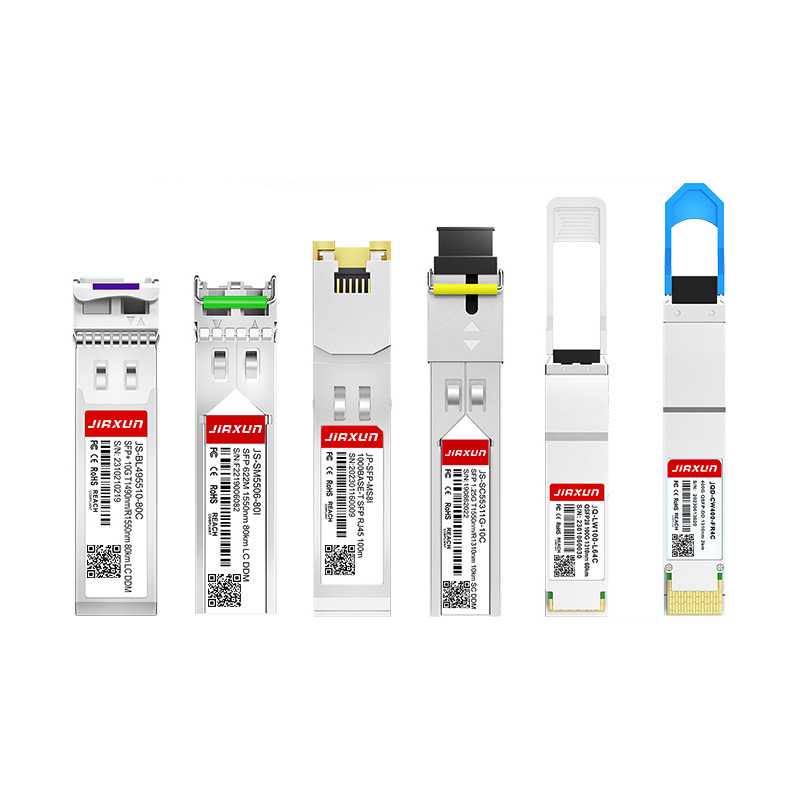
RJ45 Modular Jack Connector Guide: Types, Pinouts, and How to Choose the Right One
1. What Is an RJ45 Modular Jack Connector?
An RJ45 modular jack connector is a standardized female interface commonly used in Ethernet networking equipment. It serves as the receptacle (socket) for RJ45 plugs, enabling reliable data transmission between devices such as switches, routers, computers, and industrial controllers.
RJ45 modular jacks are typically mounted on PCBs (Printed Circuit Boards) or panels, allowing Ethernet cables to connect seamlessly to electronic circuits. These connectors are essential for applications requiring high-speed data transfer, such as Gigabit Ethernet, PoE (Power over Ethernet), and industrial automation systems.

2. RJ45 Modular Jack Connector Structure
A standard RJ45 modular jack contains several critical components:
-
Housing (Shell): Provides mechanical protection and alignment for the contact pins.
-
Contacts (Pins): Eight conductive terminals that correspond to the 8 pins of an RJ45 plug.
-
Shielding (Optional): A metal casing that protects the connector from EMI (electromagnetic interference).
-
LED Indicators (Optional): Display network link and activity status in certain models.
-
Magnetics (Optional): Integrated transformers that improve signal integrity and support isolation for Ethernet ports.
✅ Note: When the jack integrates magnetics inside the housing, it’s referred to as a Magnetic RJ45 Connector—widely used in routers, switches, and embedded systems.
3. RJ45 Modular Jack Pinout Diagram
Each RJ45 modular jack connector follows an 8-pin configuration (commonly called 8P8C—8 positions, 8 contacts).
Standard Pin Assignment (T568B):
| Pin | Wire Color | Function |
|---|---|---|
| 1 | White/Orange | Transmit Data + (TX+) |
| 2 | Orange | Transmit Data – (TX–) |
| 3 | White/Green | Receive Data + (RX+) |
| 4 | Blue | Unused / PoE Power |
| 5 | White/Blue | Unused / PoE Return |
| 6 | Green | Receive Data – (RX–) |
| 7 | White/Brown | Unused / PoE Power |
| 8 | Brown | Unused / PoE Return |
For Gigabit Ethernet (1000BASE-T), all four pairs are used for simultaneous bidirectional transmission.
4. Common Types of RJ45 Modular Jack Connectors
Different designs exist to suit diverse network and PCB requirements. Below are the most common categories:
| Type | Description | Typical Application |
|---|---|---|
| PCB Mount RJ45 Jack | Soldered directly onto a circuit board (vertical or right-angle) | Routers, switches, control boards |
| Shielded RJ45 Jack (STP) | Metal shield protects against EMI | Industrial and outdoor environments |
| Unshielded RJ45 Jack (UTP) | Cost-effective and compact; used in low-interference areas | Office networking, consumer devices |
| RJ45 Jack with Integrated Magnetics | Includes isolation transformers inside | High-speed Ethernet ports, PoE |
| Multi-Port RJ45 Connector | Two to eight RJ45 ports in one housing | Network switches, communication racks |
| Waterproof / IP67 RJ45 Jack | Sealed against dust and moisture | Outdoor surveillance, marine electronics |
? Engineering Tip: For Gigabit Ethernet or PoE devices, using magnetically integrated shielded RJ45 jacks ensures superior performance and signal stability.

5. How to Choose the Right RJ45 Modular Jack Connector
When selecting an RJ45 modular jack connector for your project, consider the following technical factors:
a. Mounting Orientation
-
Right-angle (90°): Most common for horizontal PCB layouts.
-
Vertical (180°): Used when space is limited or for top-entry boards.
b. Shielding
-
Unshielded (UTP): Ideal for standard office environments.
-
Shielded (STP): Recommended for areas with high EMI, such as factories or data centers.
c. Integrated Magnetics
Choose RJ45 with magnetics if your design requires built-in isolation or PoE compatibility.
They simplify PCB design and reduce the number of external components.
d. Transmission Speed
-
Cat5e → up to 1 Gbps
-
Cat6 / Cat6A → up to 10 Gbps
Ensure the connector matches your cable category and bandwidth requirements.
e. Environmental Requirements
-
For industrial or outdoor use, select waterproof or high-temperature models.
-
For consumer electronics, compact unshielded versions are often sufficient.
6. RJ45 Modular Jack Connector vs. RJ45 Plug
| Feature | RJ45 Modular Jack Connector | RJ45 Plug |
|---|---|---|
| Gender | Female | Male |
| Installation | PCB / panel mounted | Crimped on cable |
| Function | Receives and interfaces with plug | Inserts into jack |
| Typical Use | Devices, switches, wall panels | Ethernet cables |
Think of the jack as the device-side port, and the plug as the cable-end connector.

7. Industrial and Commercial Applications
RJ45 modular jack connectors are vital components in multiple sectors:
-
Telecommunication Equipment – Routers, modems, switches
-
Industrial Control Systems – PLCs, automation panels, sensors
-
Consumer Electronics – Smart TVs, printers, gaming consoles
-
IoT Devices – Embedded Ethernet modules
-
Security Systems – IP cameras, access control units
Reliable connectors ensure uninterrupted network communication, which is critical for system stability and data integrity.
8. Recommended RJ45 Modular Jack Brands
High-quality manufacturing ensures stable signal transmission and long-term durability.
Reputable OEMs such as JIAXUN offer a complete range of RJ45 modular jacks:
-
Single-port and multi-port options
-
Shielded and magnetic versions
-
Custom OEM/ODM designs available
-
RoHS & UL-certified components
These connectors are widely used in routers, Ethernet switches, IoT boards, and industrial network systems.
9. RJ45 Modular Jack FAQ
Q1: Can I use a Cat6 cable with a Cat5e modular jack?
➡ Yes, but the network will operate at the lower Cat5e performance level.
Q2: What’s the difference between a magnetic and non-magnetic RJ45 jack?
➡ A magnetic jack includes integrated transformers for signal coupling and noise reduction—ideal for high-speed Ethernet designs.
Q3: Are all RJ45 modular jacks PoE-compatible?
➡ Not necessarily. Choose models rated for IEEE 802.3af/at/bt if you plan to transmit power over Ethernet.
10. Conclusion
The RJ45 modular jack connector is an essential component for modern Ethernet and communication systems.
Whether you’re designing a network switch, developing an IoT device, or upgrading industrial control equipment, understanding the connector’s types, pinouts, and selection criteria ensures reliable performance and long-term durability.
For professional-grade networking solutions, opt for shielded RJ45 modular jacks with integrated magnetics—they deliver superior noise immunity and meet the demands of today’s high-speed networks.
What Is an RJ45 Ethernet Jack? A Complete Guide to Structure, Function, and Applications
What Are SFP Optics Transceivers? A Complete Guide for Network Engineers
Related Article