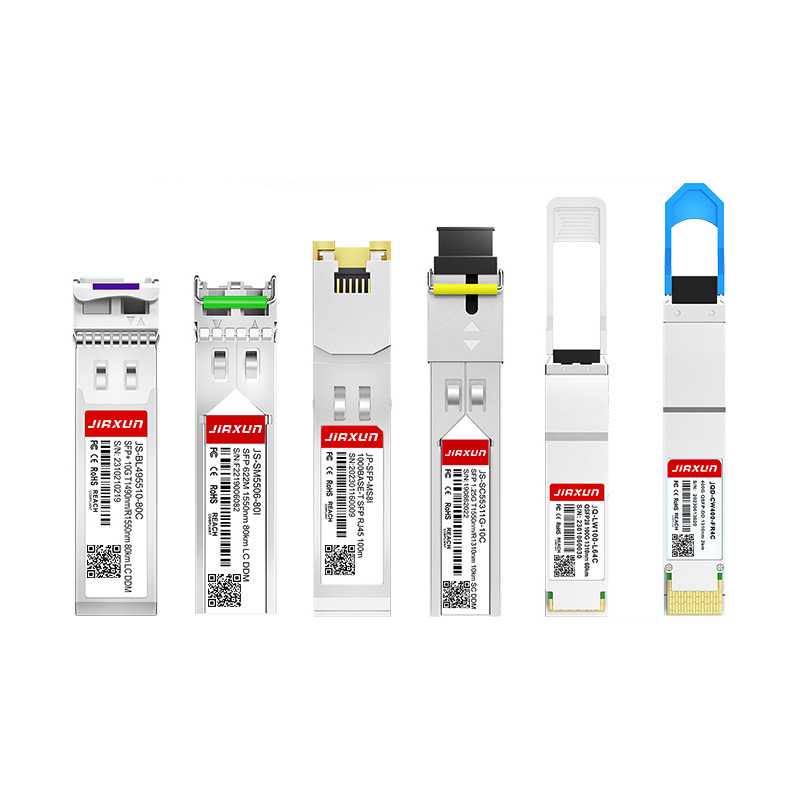
SFP+ 10G Optical Transceiver Guide: SR vs LR vs ER vs ZR Explained
Introduction
As modern data centers, telecom systems, and enterprise networks demand faster connections and higher bandwidth, SFP+ 10G Optical Transceivers have become the most common and cost-effective solution for 10-gigabit Ethernet links.
But with multiple types available — SR, LR, ER, and ZR — how do you choose the right 10G SFP+ module for your application?
This guide explains the differences between each type, their typical use cases, and how to select the ideal transceiver for your network infrastructure.

What Is an SFP+ 10G Optical Transceiver?
The SFP+ (Enhanced Small Form-Factor Pluggable) optical transceiver is a compact, hot-pluggable module used for 10-Gigabit Ethernet (10GbE) and fiber channel communication.
It supports data rates up to 10.3125 Gbps and is compliant with the IEEE 802.3ae standard. The transceiver converts electrical signals into optical signals and vice versa, enabling high-speed transmission over single-mode or multimode fiber cables.
Key Features
-
Data rate: 10 Gbps
-
Hot-pluggable SFP+ footprint
-
LC duplex or simplex interface
-
DDM (Digital Diagnostic Monitoring) support
-
Compatible with switches from Cisco, Juniper, Huawei, and more

Types of SFP+ 10G Optical Transceivers
Different SFP+ modules are designed for different transmission distances and wavelengths. The four major types are summarized below:
| Type | Wavelength | Fiber Type | Distance | Typical Use |
|---|---|---|---|---|
| SFP+ SR | 850 nm | Multimode (OM3/OM4) | Up to 300 m | Short-range data center links |
| SFP+ LR | 1310 nm | Single-mode | Up to 10 km | Enterprise and campus backbone |
| SFP+ ER | 1550 nm | Single-mode | Up to 40 km | Metropolitan or regional networks |
| SFP+ ZR | 1550 nm | Single-mode | Up to 80 km | Long-haul telecom or backbone connections |
1. SFP+ 10G SR — Short Reach
SR (Short Range) modules are optimized for short-distance connections over multimode fiber.
They are ideal for interconnecting switches and servers within the same rack or data hall.
Key Specs:
-
850 nm wavelength
-
Supports OM3 fiber (up to 300 m) and OM4 (up to 400 m)
-
LC duplex connector
-
Lowest power consumption and cost
Best For:
Data centers, Top-of-Rack (ToR) or End-of-Row (EoR) connections.
2. SFP+ 10G LR — Long Reach
LR (Long Range) modules are the most commonly deployed single-mode 10G SFP+ transceivers.
They transmit data up to 10 km using 1310 nm wavelength, making them suitable for campus and metro networks.
Key Specs:
-
1310 nm wavelength
-
Supports up to 10 km over single-mode fiber
-
LC duplex interface
-
DDM/DOM monitoring
Best For:
Enterprise backbone, fiber-to-building, and data center interconnections.

3. SFP+ 10G ER — Extended Reach
ER (Extended Range) modules extend transmission up to 40 km using 1550 nm wavelength.
They require higher laser power and receiver sensitivity, often paired with optical attenuation for shorter links.
Key Specs:
-
1550 nm wavelength
-
40 km single-mode fiber
-
LC duplex connector
-
Power budget ≥ 14 dB
Best For:
Metropolitan network rings, large campuses, and long-haul backbone.
4. SFP+ 10G ZR — Ultra Long Reach
ZR (Z Range) modules are designed for very long-distance transmissions, up to 80 km over single-mode fiber.
They are widely used by telecom operators and ISP backbone networks.
Key Specs:
-
1550 nm wavelength
-
80 km single-mode fiber
-
Typically uses DWDM/CWDM lasers
-
Higher cost and power consumption
Best For:
Telecom backbone, carrier networks, cross-city fiber links.
Choosing the Right SFP+ 10G Module
When selecting an SFP+ 10G optical transceiver, consider the following factors:
-
Transmission Distance – choose SR/LR/ER/ZR based on your link length.
-
Fiber Type – multimode for SR, single-mode for LR/ER/ZR.
-
Operating Temperature – standard (0–70 °C) or industrial (-40–85 °C).
-
Compatibility – ensure the module is tested with your switch brand.
-
Cost vs Performance – SR modules are cheapest, ZR the most expensive.
OEM & Customization Services
If you are planning large-scale deployments, partnering with a professional SFP+ 10G Optical Transceiver manufacturer can reduce costs and ensure long-term supply stability.
Manufacturers like JIAXUN provide:
-
OEM/ODM service (label, packaging, firmware)
-
Custom wavelength and transmission distance
-
Compatibility testing for Cisco, Huawei, Juniper, and more
-
RoHS and CE certified production lines
Example:
A telecom operator may order customized 10G SFP+ ZR 80 km modules with branded labeling and specific DDM thresholds for network standardization.
FAQs
Q1: Can SFP+ 10G modules work with SFP 1G ports?
? No. SFP+ ports support 10G modules only, while SFP ports are limited to 1G speed.
Q2: What is the difference between SFP+ and SFP28?
? SFP28 supports 25 Gbps, while SFP+ supports 10 Gbps. They are not interchangeable.
Q3: How do I test module compatibility?
? Always check the vendor’s compatibility list or request a test sample before mass purchase.
Conclusion
Understanding the differences among SFP+ 10G Optical Transceiver types helps you design a more stable and cost-efficient fiber network.
-
Use SR for short data-center links
-
LR for standard single-mode backbone
-
ER for extended metro connections
-
ZR for long-haul transmission up to 80 km
For large-scale or OEM projects, consider partnering with a trusted 10G SFP+ Optical Transceiver manufacturer that provides consistent quality, fast delivery, and technical support.
SFP Cages Manufacturer | Custom SFP/SFP+ Cages for Network Equipment
OEM SFP Cage Manufacturer: Inside the Manufacturing Process and Custom Design Capabilities
Related Article