
The function of PLC module
2025-02-14
PLC module, which is the module of programmable logic controller, is the core component in industrial automation. The main functions of PLC modules are reflected in the following aspects:
1、 Realize industrial automation control
The PLC module, through its internal microprocessor, input/output interface, memory and other components, can receive signals from input devices such as sensors and switches, and after processing, output control signals to actuators such as motors and valves, thereby achieving automation control of industrial equipment. This enables industrial equipment such as production lines, robots, packaging machines, and automated warehouses to operate efficiently and accurately according to predetermined programs.
The PLC module, through its internal microprocessor, input/output interface, memory and other components, can receive signals from input devices such as sensors and switches, and after processing, output control signals to actuators such as motors and valves, thereby achieving automation control of industrial equipment. This enables industrial equipment such as production lines, robots, packaging machines, and automated warehouses to operate efficiently and accurately according to predetermined programs.
2、 Improve production efficiency and product quality
The PLC module can monitor and control various parameters in the production process, such as temperature, pressure, flow rate, liquid level, speed, etc., to ensure the stability and controllability of the production process. Through precise control and adjustment, PLC modules help improve production efficiency and product quality, reduce production costs, and enhance the competitiveness of enterprises.
The PLC module can monitor and control various parameters in the production process, such as temperature, pressure, flow rate, liquid level, speed, etc., to ensure the stability and controllability of the production process. Through precise control and adjustment, PLC modules help improve production efficiency and product quality, reduce production costs, and enhance the competitiveness of enterprises.
3、 Adapt to various complex industrial environments
PLC modules have the characteristics of high reliability, flexibility, and scalability, and can adapt to various harsh industrial environments such as high temperature, high humidity, vibration, and corrosion. At the same time, by expanding different functional modules, PLC modules can easily adapt to various control needs, demonstrating extremely high flexibility. This makes PLC modules have a wide range of application prospects in the field of industrial automation.
PLC modules have the characteristics of high reliability, flexibility, and scalability, and can adapt to various harsh industrial environments such as high temperature, high humidity, vibration, and corrosion. At the same time, by expanding different functional modules, PLC modules can easily adapt to various control needs, demonstrating extremely high flexibility. This makes PLC modules have a wide range of application prospects in the field of industrial automation.
4、 Realize communication networking and data exchange
The PLC module has communication networking function, which can exchange data with the upper computer or other intelligent devices to achieve seamless integration of the system. By building a multi-level distributed control system, PLC modules can achieve "centralized management and decentralized control", improving the operational efficiency and reliability of the entire industrial system. In addition, PLC modules can also collect, analyze, and process data during the production process, providing strong support for enterprise production management.
The PLC module has communication networking function, which can exchange data with the upper computer or other intelligent devices to achieve seamless integration of the system. By building a multi-level distributed control system, PLC modules can achieve "centralized management and decentralized control", improving the operational efficiency and reliability of the entire industrial system. In addition, PLC modules can also collect, analyze, and process data during the production process, providing strong support for enterprise production management.
5、 Promote the development of industrial automation and intelligence
With the continuous development of industrial automation and intelligent technology, the application scope of PLC modules is still expanding. For example, in the field of intelligent manufacturing, PLC modules can be used in conjunction with industrial robots, intelligent sensors, and other devices to achieve more complex and precise control tasks. In addition, PLC modules can also be combined with advanced technologies such as cloud computing and big data to promote the arrival of the Industry 4.0 era.
With the continuous development of industrial automation and intelligent technology, the application scope of PLC modules is still expanding. For example, in the field of intelligent manufacturing, PLC modules can be used in conjunction with industrial robots, intelligent sensors, and other devices to achieve more complex and precise control tasks. In addition, PLC modules can also be combined with advanced technologies such as cloud computing and big data to promote the arrival of the Industry 4.0 era.

Single Light Controller
The Prominence of 200G Optical Transceiver in JIAXUN
Related Article

LAN Transformer vs Discrete Magnetics Guide | JIAXUN
LAN Transformer vs. Discrete Magnetics: Why Integrated RJ45 Connectors are Better for Modern Networking

Invitation | Jiaxun (Huizhou) Intelligent Technology Invites You to the 2026 Global Sources Consumer Electronics Show
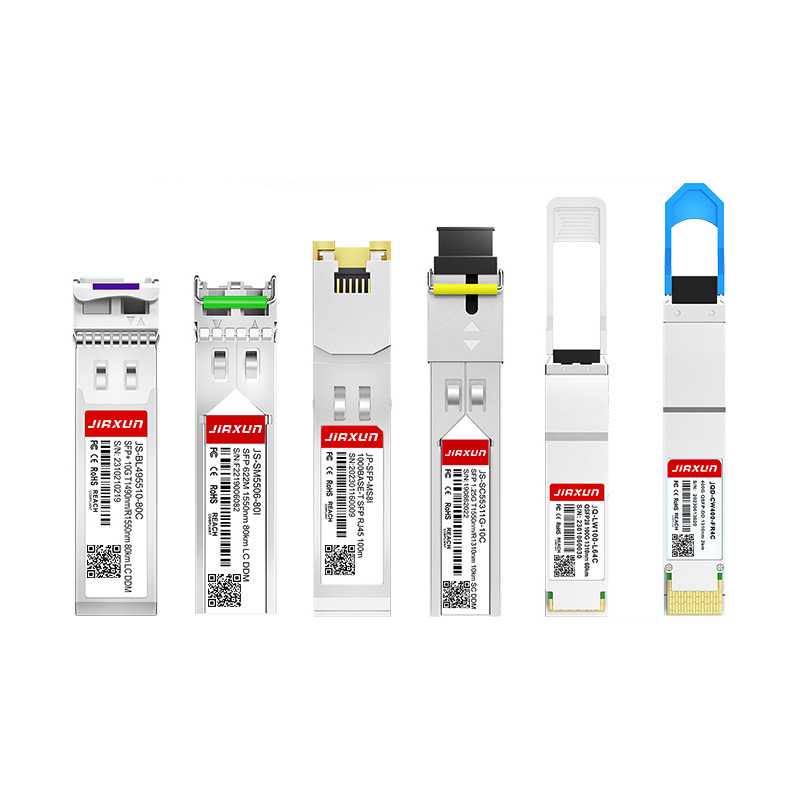
As global data traffic continues to grow rapidly, modern networks require faster and more efficient data transmission technologies. Optical transceivers play a critical role in fiber optic communication systems by converting electrical signals into optical signals for high-speed data transmission.
Complete Guide to SFP Modules and Optical Transceivers SFP, 10G SFP+, SFP28, QSFP28, QSFP-DD, 400G and 800G Modules Explained