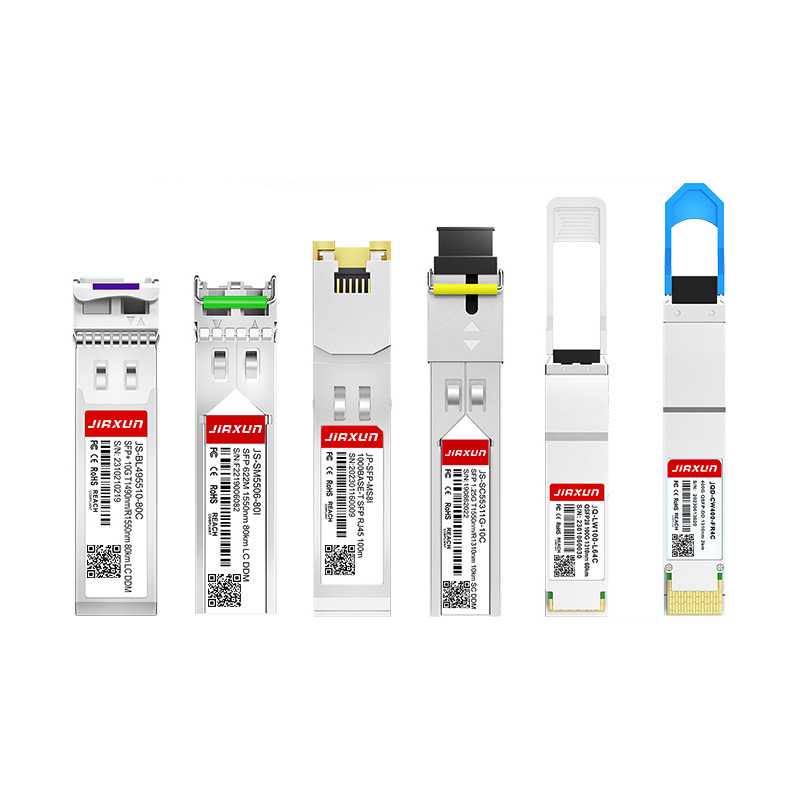
What Is a 10G SFP+ Module? Types, Applications, and Compatibility Explained
Introduction
In modern high-speed networks, reliable data transmission is essential. The 10G SFP+ Module (Small Form-factor Pluggable Plus) has become one of the most widely used optical transceivers for 10-Gigabit Ethernet and data center connections. Whether you are an IT engineer, system integrator, or network equipment distributor, understanding how 10G SFP+ modules work — and how to choose the right one — is crucial for building stable and cost-efficient networks.
What Is a 10G SFP+ Module?
A 10G SFP+ module is a compact, hot-pluggable transceiver designed for transmitting and receiving 10-Gigabit Ethernet signals over copper or fiber optic cables.
Compared with standard SFP modules (1G), the SFP+ standard supports 10 times the data rate while maintaining a similar size and interface, making it ideal for upgrading existing network infrastructures without major hardware changes.
Key Features
-
Data Rate: 10.3125 Gbps (10-Gigabit Ethernet)
-
Interface: LC duplex (fiber) or RJ45 (copper)
-
Transmission Distance: 300m to 80km (depending on module type)
-
Hot-swappable: Can be inserted or removed without powering off the device
-
Compatibility: Works with most network switches, routers, and servers that support 10G SFP+ ports

10G SFP+ Module Types
10G SFP+ modules come in different versions based on wavelength, transmission distance, and fiber type. Below are the most common types:
| Type | Wavelength | Transmission Distance | Fiber Type | Typical Use Case |
|---|---|---|---|---|
| SFP+ SR (Short Range) | 850 nm | Up to 300 m | MMF (OM3/OM4) | Data centers, short-range fiber links |
| SFP+ LR (Long Range) | 1310 nm | Up to 10 km | SMF | Campus or metro networks |
| SFP+ ER (Extended Range) | 1550 nm | Up to 40 km | SMF | Metropolitan or long-distance backbone |
| SFP+ ZR (Ultra Long Range) | 1550 nm | Up to 80 km | SMF | Carrier or ISP networks |
| SFP+ DAC (Direct Attach Copper) | N/A | 1–10 m | Copper cable | Server-to-switch interconnects |
| SFP+ AOC (Active Optical Cable) | N/A | 3–100 m | Fiber | Short-to-medium-distance, plug-and-play links |
Applications of 10G SFP+ Modules
The versatility of 10G SFP+ modules makes them suitable for a wide range of applications:
1. Data Centers
SFP+ modules are the backbone of high-speed server connections, enabling fast communication between switches, storage, and servers. SR and DAC modules are especially common for top-of-rack (ToR) deployments.
2. Enterprise Networks
Businesses upgrading from Gigabit to 10-Gigabit networks often use LR modules to connect different floors or buildings, ensuring higher bandwidth and performance.
3. Telecom and Carrier Networks
ISPs and telecom operators rely on ER and ZR modules to achieve stable long-distance optical transmission — often up to 80 km — without repeaters.
4. Industrial and Surveillance Systems
10G SFP+ transceivers are also found in industrial Ethernet, security monitoring systems, and transportation networks, where reliability and stability are critical.

Compatibility of 10G SFP+ Modules
1. Brand Compatibility
High-quality SFP+ modules are designed to be multi-vendor compatible, working seamlessly with major network brands such as:
-
Cisco
-
HPE / Aruba
-
Juniper
-
MikroTik
-
Ubiquiti
-
Arista
-
Dell, Intel, and more
Before purchasing, it’s recommended to check the EEPROM coding and firmware compatibility — or choose a vendor-tested compatible module to avoid connection issues.
2. Interface Compatibility
-
LC Duplex Interface: For fiber modules (SR, LR, ER, ZR)
-
RJ45 Interface: For copper 10GBASE-T modules
-
Cage/Port Compatibility: Fully backward compatible with SFP+ slots, but not with SFP28 (25G) unless explicitly supported.
How to Choose the Right 10G SFP+ Module
Selecting the right module depends on your network environment and transmission needs. Here are practical selection tips:
-
Determine the Transmission Distance
-
Use SR (850 nm) for short distances (<300 m).
-
Choose LR (1310 nm) for medium-range (≤10 km).
-
Use ER/ZR for long-haul networks (40–80 km).
-
-
Match the Fiber Type
-
Multimode fiber (OM3/OM4) for SR.
-
Single-mode fiber (OS1/OS2) for LR/ER/ZR.
-
-
Check Compatibility with Network Devices
-
Confirm with your switch/router model.
-
Choose vendor-coded modules for plug-and-play reliability.
-
-
Consider the Environment
-
For data centers: SFP+ DAC/AOC saves cost and power.
-
For telecom: Choose industrial-grade modules with extended temperature range.
-

Advantages of Using 10G SFP+ Modules
-
✅ High bandwidth with compact size
-
✅ Flexible configuration for both copper and fiber networks
-
✅ Lower power consumption than XFP or 10GBASE-T solutions
-
✅ Scalability — easy to upgrade from 1G to 10G without changing the infrastructure
-
✅ Cost-effective — wide availability from global OEM suppliers
Conclusion
The 10G SFP+ Module plays a crucial role in modern networking — bridging the gap between performance, scalability, and cost efficiency. Whether used in a data center or enterprise network, the right SFP+ module ensures high-speed, reliable, and long-distance data transmission.
When selecting a supplier, prioritize manufacturers with proven compatibility testing, OEM capability, and strict quality control, ensuring your network operates at peak performance.
RJ45 Connector Pinout and Wiring Color Code (T568A & T568B Guide)
High Quality LAN Transformer Manufacturer in China | JIAXUN Ethernet Magnetics Supplier
Related Article