Magnetic RJ45 Jack Complete Guide: Specifications, Applications, and Supplier Selection
Introduction
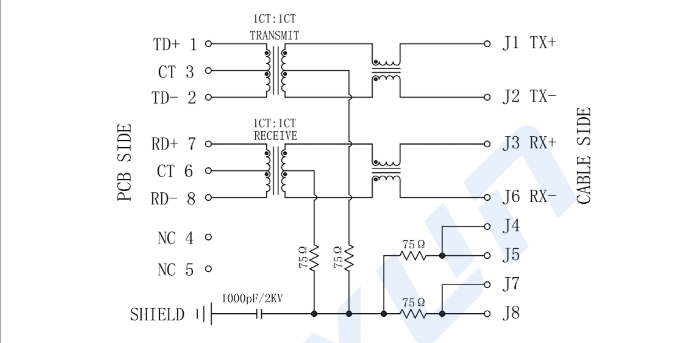
The demand for reliable, high-speed Ethernet connectivity continues to grow across industries such as telecommunications, data centers, industrial automation, and consumer electronics. One component that plays a vital role in ensuring robust Ethernet connections is the magnetic RJ45 jack. Unlike a standard RJ45 connector, a magnetic RJ45 jack integrates magnetic components—such as isolation transformers and common mode chokes—directly into the connector housing. This integration improves performance, reduces electromagnetic interference (EMI), and simplifies PCB design.
In this guide, we will explore what a magnetic RJ45 jack is, its benefits, technical specifications, applications, and procurement considerations. By the end of this article, you will have a clear understanding of how to select the right magnetic RJ45 jack for your projects and where to source reliable products.
What Is a Magnetic RJ45 Jack?
A magnetic RJ45 jack is an Ethernet connector with built-in magnetics. The integrated components typically include:
-
Isolation Transformers – Provide galvanic isolation between the device and the network.
-
Common Mode Chokes – Reduce EMI and improve signal integrity.
-
LED Indicators – Show link and activity status.
This design reduces the need for external magnetic modules on the PCB, saving board space and improving assembly efficiency.
Key benefits:
-
Simplifies PCB design by integrating magnetics.
-
Enhances EMI suppression and signal integrity.
-
Provides electrical isolation for safety.
-
Supports fast Ethernet (10/100 Mbps), Gigabit Ethernet (10/100/1000 Mbps), and higher speeds.

Magnetic RJ45 Jack vs. Standard RJ45
A common question is the difference between a magnetic RJ45 jack and a standard RJ45 connector.
| Feature | Standard RJ45 | Magnetic RJ45 |
|---|---|---|
| Magnetics | External, separate on PCB | Integrated inside connector |
| EMI Suppression | Limited | Strong, with built-in chokes |
| Board Space | Requires more space | Saves space |
| Ease of Design | Requires additional components | Simplified design |
| Isolation | Provided externally | Integrated isolation |
For modern high-speed networking devices, the magnetic RJ45 jack has become the preferred choice due to its compactness and reliability.
Key Specifications of Magnetic RJ45 Jacks
When evaluating a magnetic RJ45 jack, engineers must consider several important parameters:
-
Supported Speeds – 10/100 Mbps, 10/100/1000 Mbps (Gigabit), or 2.5G/5G/10G Ethernet.
-
Connector Type – Single port, multi-port (stacked), vertical or right-angle mount.
-
Pin Configuration – Standard pinouts compliant with IEEE 802.3 Ethernet.
-
Integrated LEDs – For link/activity status.
-
Operating Temperature Range – -40°C to +85°C for industrial applications.
-
Shielding – EMI shielding for reliable high-speed data transfer.
-
Compliance – UL, RoHS, and REACH certifications.
Engineers often refer to the magnetic RJ45 jack datasheet to review detailed electrical parameters, pinouts, and mechanical drawings.

Applications of Magnetic RJ45 Jacks
Magnetic RJ45 jacks are widely used in industries requiring secure and stable Ethernet connectivity:
-
Telecommunications – Switches, routers, and fiber access equipment.
-
Data Centers – Servers, storage devices, and high-speed networking systems.
-
Industrial Automation – PLCs, HMIs, and industrial controllers.
-
Consumer Electronics – Smart TVs, gaming consoles, and IP cameras.
-
Medical Devices – Imaging equipment, patient monitoring systems, and diagnostic tools.
How to Select the Right Magnetic RJ45 Jack
Selecting the right magnetic RJ45 jack requires careful consideration of application needs. Here is a selection guide:
-
Ethernet Speed Requirements – Match the jack to the target application (10/100, 1G, 2.5G, etc.).
-
Port Density – Choose between single-port or stacked multi-port connectors.
-
Board Layout – Select vertical or right-angle mount based on PCB design.
-
Industrial vs. Commercial Use – Ensure operating temperature and durability meet the environment.
-
EMI/Signal Integrity – Check datasheet for common mode rejection and transformer isolation.
-
Supplier Reliability – Source from trusted magnetic RJ45 jack manufacturers with certifications and strong QA processes.
Common Design and Installation Challenges
While magnetic RJ45 jacks simplify PCB layout, engineers may encounter challenges such as:
-
Thermal Stress – High-density boards require careful thermal management.
-
EMI Leakage – Poor shielding can affect nearby sensitive circuits.
-
Mechanical Durability – Frequent cable insertions may wear out lower-quality connectors.
-
Compatibility Issues – Some designs may require specific pinouts or transformer ratios.
Best practices:
-
Review the magnetic RJ45 jack datasheet carefully.
-
Use shielded connectors in noisy environments.
-
Perform pre-layout signal integrity simulations.

Procurement & Supplier Considerations
When searching for magnetic RJ45 jack suppliers, buyers should evaluate:
-
Quality Certifications – ISO9001, UL, CE, and RoHS.
-
Customization – OEM/ODM services for unique designs.
-
Pricing – Balance competitive magnetic RJ45 jack price with quality and reliability.
-
Lead Times – Ensure suppliers can meet production schedules.
-
Technical Support – Access to engineering resources and fast response times.
Future Trends in Magnetic RJ45 Jacks
As Ethernet standards evolve, magnetic RJ45 jacks are also advancing:
-
Support for Multi-Gigabit Ethernet (2.5G, 5G, 10G).
-
Enhanced EMI Shielding for improved performance in high-density boards.
-
Compact Designs for IoT and edge computing devices.
-
Environmentally Friendly Materials compliant with RoHS/REACH.
These innovations ensure that the magnetic RJ45 jack remains essential in next-generation networking hardware.
Frequently Asked Questions (FAQ)
Q1: What is the difference between a magnetic RJ45 jack and a standard RJ45 connector?
A: A magnetic RJ45 jack integrates magnetics such as transformers and chokes, whereas a standard RJ45 requires external components.
Q2: Can magnetic RJ45 jacks support Gigabit Ethernet?
A: Yes, most modern designs support 10/100/1000 Mbps and higher speeds.
Q3: How do I check the compatibility of a magnetic RJ45 jack?
A: Review the product’s datasheet for pinouts, transformer ratios, and compliance with IEEE standards.
Q4: What factors influence magnetic RJ45 jack price?
A: Price depends on speed rating, shielding, port density, certifications, and supplier reputation.
Q5: Where can I find reliable magnetic RJ45 jack manufacturers?
A: Look for suppliers with ISO-certified facilities, global distribution networks, and positive customer feedback.
Jiaxun Intelligent Technology – Reliable Magnetic RJ45 Jack Manufacturer
Jiaxun Intelligent Technology specializes in designing and manufacturing high-performance interconnect solutions, including magnetic RJ45 jacks, Ethernet connectors, and custom networking components. With years of expertise and global customer partnerships, Jiaxun ensures product quality, competitive pricing, and technical excellence.
Why choose Jiaxun?
-
Wide product portfolio: Magnetic RJ45 jacks from 10/100 Mbps to multi-Gigabit solutions.
-
Certified manufacturing: ISO9001, RoHS, and CE compliance.
-
Customization support: OEM/ODM designs tailored to your project.
-
Strong supply chain: Reliable lead times and global logistics support.
-
Engineering support: Professional guidance for selection and integration.
If you are looking for a trusted magnetic RJ45 jack supplier, Jiaxun Intelligent Technology provides the expertise, quality, and service you need to accelerate your networking projects.
PoE vs Non-PoE Magnetic RJ45 Jacks: Selecting the Right Connector for Your Application
Top 5 Reliable RJ45 Magnetic Connector Suppliers: Bulk Pricing & Lead Time Comparison 2024