SFP Cage & Connector: The Complete Guide for High-Speed Network Hardware Design
SFP Cage & Connector: The Backbone of Modern Optical Networking
As global data traffic continues to grow rapidly, high-speed communication equipment has become the foundation of data centers, telecom infrastructure, industrial Ethernet, AI servers, and cloud computing systems. Among the critical hardware components enabling these systems, the SFP Cage and SFP Connector play a vital role in ensuring stable, high-speed signal transmission.
Whether you are designing switches, routers, servers, or optical transmission equipment, selecting the right SFP cage and connector directly impacts performance, EMI shielding, thermal reliability, and long-term durability.
This guide explains everything engineers, purchasers, and OEM buyers need to know about SFP cages and connectors.
What Is an SFP Cage?
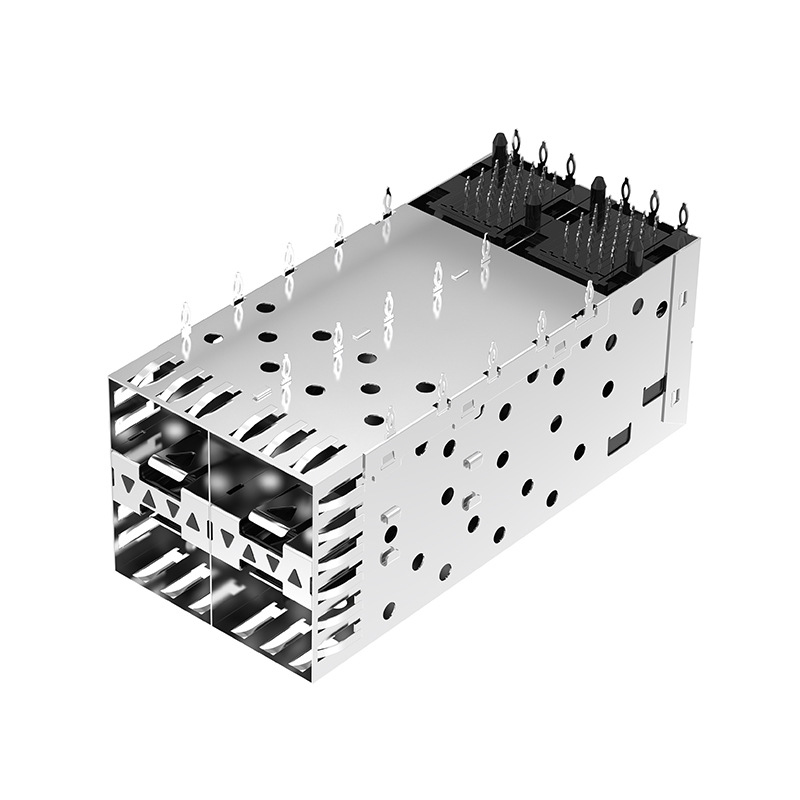
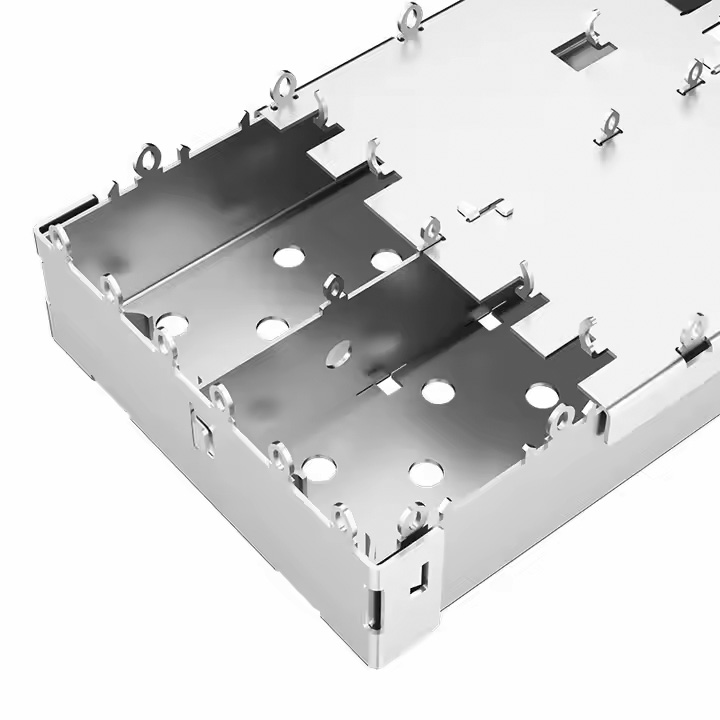
An SFP Cage is the metal shielding structure mounted on a PCB that holds an SFP transceiver module securely in place. It provides:
- Mechanical support
- EMI shielding
- Heat dissipation
- High-speed signal grounding
- Reliable insertion/removal performance
SFP cages are widely used in:
- Ethernet switches
- Telecom base stations
- Data center equipment
- Industrial networking devices
- Optical transport systems
- AI and cloud servers
Typical SFP Cage Structure
An SFP cage usually consists of:
- EMI shielding shell
- Connector interface
- Spring fingers
- Heat sink compatibility
- Light pipe (optional)
- Press-fit or SMT mounting structure
Modern cages are engineered to support extremely high data rates while minimizing electromagnetic interference.
What Is an SFP Connector?
The SFP Connector is the electrical interface mounted inside the cage. It connects the transceiver module to the PCB and enables high-speed signal transmission.
The connector is responsible for:
- Signal integrity
- Stable contact performance
- High-frequency transmission
- Durability over repeated insertions
High-quality connectors are critical for reducing:
- Signal loss
- Crosstalk
- Return loss
- Transmission instability
Difference Between SFP Cage and SFP Connector
| Item | SFP Cage | SFP Connector |
|---|---|---|
| Function | Mechanical shielding & module holding | Electrical signal transmission |
| Material | Metal shielding structure | Plastic + copper alloy terminals |
| Main Role | EMI protection & structural stability | High-speed data connectivity |
| Mounted On | PCB surface | Inside cage |
| Replacement Frequency | Lower | Higher in some designs |
In simple terms:
- The cage protects and secures the module.
- The connector transfers electrical signals.
Both components work together as a complete SFP interface system.
Types of SFP Cages
1. Single-Port SFP Cage


Used in compact networking devices where board space is limited.
Advantages
- Compact size
- Lower cost
- Easy thermal design
Applications
- Industrial switches
- Media converters
- Embedded communication systems
2. Multi-Port SFP Cage & Connector


Supports multiple SFP ports within limited PCB space.
Advantages
- Higher port density
- Better rack utilization
- Optimized airflow
Common Configurations
- 1x2
- 1x4
- 2x4
- 2x6
- 2x8
3. Press-Fit SFP Cage
Designed for solder-free PCB assembly.
Benefits
- Faster assembly
- Better reliability
- Easier maintenance
- Reduced thermal stress during manufacturing


Press-fit designs are increasingly popular in telecom and automotive networking applications.
4. Heat Sink SFP Cage


Suitable For
- 10G SFP+
- 25G SFP28
- High-power optical modules
SFP vs SFP+ vs SFP28 Cage
| Type | Speed | Typical Application |
|---|---|---|
| SFP | 1G | Gigabit Ethernet |
| SFP+ | 10G | Data center & enterprise networking |
| SFP28 | 25G | Cloud computing & AI servers |
Although their external dimensions are similar, higher-speed cages require stricter:
- Signal integrity control
- EMI shielding
- Thermal performance
- Mechanical precision
Key Features of High-Quality SFP Cages & Connectors
1. Excellent EMI Shielding
High-speed networking systems generate significant electromagnetic interference.
A premium SFP cage should provide:
- Strong grounding design
- Effective shielding fingers
- Stable EMI suppression
This helps equipment pass international EMC certifications.
2. Superior Signal Integrity
At 10G, 25G, and higher speeds, poor connector design can severely degrade signal quality.
Important parameters include:
- Insertion loss
- Return loss
- Crosstalk
- Impedance matching
High-quality connectors maintain stable transmission across long operational cycles.
3. High Durability
Industrial-grade SFP connectors typically support:
- 100+ insertion cycles
- High-temperature environments
- Vibration resistance
- Long-term oxidation protection
4. Automated Production Compatibility
Modern OEM factories require components suitable for:
- SMT assembly
- Reflow soldering
- Automated inspection
- High-volume production
Applications of SFP Cage & Connector
Data Centers


Used in:
- Spine-leaf architecture
- TOR switches
- AI computing clusters
Telecom Infrastructure
Widely used in:
- 5G base stations
- Optical transport equipment
- Carrier Ethernet systems
Industrial Ethernet
Industrial networking requires:
- Stable transmission
- Vibration resistance
- Extended temperature tolerance
SFP cages are commonly integrated into:
- Industrial switches
- Railway communication systems
- Smart factory equipment
Enterprise Networking
Applications include:
- Campus switches
- Security systems
- Server networking
- Storage systems
How to Choose the Right SFP Cage Supplier
Selecting the right manufacturer is critical for product stability and long-term supply chain reliability.
Evaluate Manufacturing Capability
A reliable factory should have:
- High-speed connector production experience
- Precision stamping capability
- Automated assembly lines
- EMI testing equipment
Check Compliance Standards
Common standards include:
- MSA compatibility
- RoHS
- REACH
- UL certification
Review OEM/ODM Capability
Professional suppliers should support:
- Custom cage structures
- Heat sink design
- Port configuration customization
- Logo marking
- Packaging customization
Why OEM Buyers Prefer Chinese SFP Cage Manufacturers
China has become one of the world’s largest manufacturing centers for optical interconnect components.
Advantages include:
- Mature supply chain
- Competitive pricing
- Fast lead time
- Large-scale production
- Strong OEM support
Experienced factories can provide:
- Monthly mass production capacity
- Engineering support
- Rapid prototyping
- Custom tooling development
Future Trends of SFP Cage Technology
As AI, cloud computing, and hyperscale data centers continue evolving, SFP cage technology is moving toward:
Higher Speed Support
Future designs will support:
- 56G
- 112G PAM4
- 400G architectures
Better Thermal Management
Heat dissipation will become increasingly important for:
- AI servers
- High-density switches
- Edge computing systems
Higher Port Density
Manufacturers are developing:
- Ultra-compact cages
- Improved airflow structures
- Integrated thermal modules
Why Choose JIAXUN as Your SFP Cage & Connector Manufacturer
As an experienced OEM/ODM manufacturer established in 1997, JIAXUN specializes in:
Our Advantages
- Multiple manufacturing bases
- 1000+ employees
- Automated production lines
- Strict quality control
- High monthly production capacity
- Fast global delivery
We support:
- Custom design
- High-speed networking applications
- Industrial-grade requirements
- OEM/ODM projects
Frequently Asked Questions (FAQ)
What is the purpose of an SFP cage?
An SFP cage secures the optical transceiver module while providing EMI shielding, grounding, and thermal support.
Are SFP and SFP+ cages the same?
Their dimensions are similar, but SFP+ cages are designed for higher-speed signal transmission and stricter EMI requirements.
What materials are used in SFP cages?
Most cages use stainless steel or copper alloy materials with nickel plating for EMI protection and durability.
What is the difference between press-fit and soldered SFP cages?
Press-fit cages do not require soldering and offer improved manufacturing reliability and easier assembly.
Can SFP cages be customized?
Yes. OEM manufacturers commonly provide:
- Port customization
- Heat sink options
- Light pipe design
- EMI spring optimization
- Custom logos and packaging
Conclusion
SFP cages and connectors are essential components in modern high-speed communication equipment. Their performance directly impacts signal integrity, EMI shielding, thermal management, and overall network reliability.
As data centers, AI computing, and telecom infrastructure continue expanding, demand for high-quality SFP interconnect solutions will continue growing rapidly.
Choosing an experienced OEM manufacturer with strong engineering capability is the key to ensuring product quality and long-term competitiveness in the networking industry.
What Is an SFP Cage? Structure, Function & Design Guide