What Is an SFP Cage Connector? A Complete Guide for Engineers and Buyers
Introduction
In today’s rapidly expanding data-driven world, the need for reliable, high-speed connectivity is greater than ever. From enterprise servers to telecommunications infrastructure, network hardware requires compact yet powerful interfaces that ensure efficient data transmission. One critical component that supports this demand is the SFP cage connector. Although relatively small, this part plays an essential role in the performance and stability of optical and electrical transceivers. This article provides an in-depth guide to SFP cage connectors, covering their functionality, design standards, applications, procurement factors, and future trends. Whether you are an engineer, a procurement specialist, or a business decision-maker, you will gain valuable insights into how these connectors can influence your project outcomes.
What Is an SFP Cage Connector?
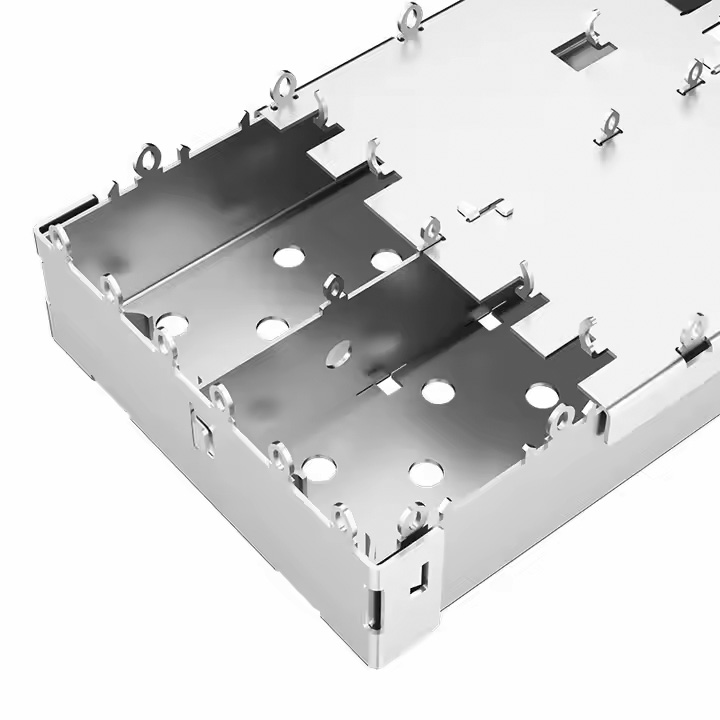
An SFP (Small Form-factor Pluggable) cage connector is a metallic enclosure that houses and protects SFP transceiver modules. It provides both mechanical stability and electromagnetic interference (EMI) shielding while ensuring reliable connectivity between the transceiver and the host device. Without the cage, the module could be vulnerable to mechanical stress, environmental factors, or electromagnetic noise.
The connector is typically mounted directly onto a printed circuit board (PCB). Its primary function is to ensure proper alignment of the SFP transceiver with the electrical contacts on the board, enabling seamless high-speed data transmission.
Key functions include:
-
Protecting SFP modules from physical damage
-
Providing EMI shielding for stable data transmission
-
Ensuring mechanical retention during hot-swapping operations
-
Supporting thermal management through airflow and heat dissipation

How SFP Cage Connectors Work
SFP cage connectors work as a bridge between the transceiver module and the system board. Once an SFP transceiver is inserted, the cage holds it securely in place, aligning the electrical contacts with the host system interface. This alignment ensures:
-
Signal Integrity – By reducing electrical noise and minimizing crosstalk.
-
Mechanical Stability – The cage locks the module in place, preventing damage caused by vibrations or unintentional movement.
-
Hot-Swap Support – Users can insert or remove modules without shutting down the entire system.
-
EMI Protection – The cage acts as a Faraday shield, preventing interference that could disrupt high-speed signals.
Key Specifications and Standards
To ensure compatibility and reliability, SFP cage connectors are designed in compliance with Multi-Source Agreements (MSAs) and industry standards.
Typical specifications include:
-
Form Factor: SFP, SFP+, QSFP (Quad Small Form-Factor Pluggable)
-
Data Rate Support: From 1 Gbps (SFP) to 100 Gbps+ (QSFP28 and beyond)
-
Material: High-conductivity copper alloys with tin or gold plating
-
Mounting Style: Press-fit, solder tail, or SMT (Surface-Mount Technology)
-
Operating Temperature: -40°C to +85°C, depending on application
Standards compliance:
-
IEEE 802.3 Ethernet standards
-
Fibre Channel specifications
-
Optical Internetworking Forum (OIF) guidelines
-
RoHS and REACH environmental compliance
For engineers seeking deeper information, suppliers often provide sfp cage connector datasheets containing detailed dimensions and tolerance specifications.

Applications Across Industries
SFP cage connectors are widely used in sectors where data communication is critical.
-
Telecommunications: In base stations, fiber networks, and backbone infrastructure.
-
Data Centers: For server-to-switch connections, high-speed interconnects, and storage networks.
-
Enterprise Networks: Supporting LAN, MAN, and WAN deployments.
-
Industrial Automation: Enabling machine-to-machine communication in rugged environments.
-
Medical Equipment: Providing stable data transfer in diagnostic imaging and patient monitoring devices.
How to Select the Right SFP Cage Connector (Selection Guide)
Choosing the correct SFP cage connector can be challenging, especially when balancing technical requirements with budget constraints. Here are the main factors to consider:
-
Data Rate Requirements – Ensure the cage supports the bandwidth needed (1G, 10G, 25G, 100G, etc.).
-
Form Factor – Match the connector to your transceiver type (SFP, SFP+, QSFP, etc.).
-
Thermal Design – Consider airflow direction, cage venting, and heat dissipation for high-density systems.
-
Mechanical Design – Verify the retention mechanism for vibration resistance and hot-swap stability.
-
EMI Performance – Select cages with spring fingers or gaskets for improved shielding.
-
Compliance – Ensure compliance with industry standards for interoperability.
-
Supplier Reliability – Partner with sfp cage connector suppliers who have proven track records of quality and certification.
Common Design & Installation Challenges
Even with standardization, engineers often face practical challenges when working with SFP cage connectors:
-
EMI Leakage: Poor grounding or improper cage design can lead to signal degradation.
-
Thermal Issues: High-density boards may experience overheating if airflow is insufficient.
-
Insertion Force: Excessive force during installation can damage the PCB or connector.
-
Alignment Errors: Misalignment during soldering or press-fit installation may cause connectivity issues.
-
Durability Concerns: In applications requiring frequent hot-swaps, connector fatigue can shorten product life.
Best practices include:
-
Using PCB layouts optimized for high-speed signals
-
Conducting pre-layout simulation for EMI and thermal performance
-
Implementing proper grounding and shielding techniques
Comparison: SFP Cage vs. Other Connector Types
It is essential to understand how SFP cage connectors compare with alternative solutions.
-
RJ45 Connectors: Cheaper, commonly used for copper Ethernet connections but limited to shorter distances and lower bandwidths.
-
Direct Attach Copper (DAC) Cables: Good for short-range, high-speed interconnects but less flexible than pluggable optics.
-
QSFP Cages: Larger form factor, supporting higher bandwidth (40G, 100G), often used in data center environments.
The sfp cage connector strikes a balance between compact size, modular flexibility, and performance, making it ideal for scalable network infrastructure.

Procurement & Supplier Considerations
When sourcing SFP cage connectors, buyers should evaluate suppliers based on several criteria:
-
Product Quality – Look for suppliers with strict quality control processes.
-
Certifications – Ensure compliance with ISO9001, RoHS, CE, or UL certifications.
-
Customization Capability – Some projects may require tailored designs for unique applications.
-
Lead Time & Availability – Reliable delivery schedules are crucial for production planning.
-
Cost Efficiency – Balance competitive sfp cage connector price with long-term reliability.
-
Technical Support – A good supplier should offer pre-sales and after-sales engineering assistance.
For large-scale buyers, partnering with experienced sfp cage connector manufacturers can ensure consistent quality and supply chain stability.
Future Trends in SFP Cage Connector Technology
As network speeds continue to increase, the design and performance of SFP cage connectors are evolving.
-
Higher Data Rates: Support for 200G and 400G modules.
-
Advanced EMI Shielding: Improved designs for ultra-low signal interference.
-
Thermal Optimization: Better vented cages for efficient cooling in dense racks.
-
Miniaturization: Smaller footprints to support compact hardware designs.
-
Eco-Friendly Materials: Adoption of sustainable, RoHS-compliant materials.
These advancements will make the sfp cage connector even more vital for future-proof networking infrastructure.
Frequently Asked Questions (FAQ)
Q1: What is the lifespan of an SFP cage connector?
A: With proper use, high-quality SFP cage connectors can last through thousands of insertion/removal cycles without significant degradation.
Q2: Can I reuse an SFP cage connector after desoldering?
A: Generally not recommended, as the mechanical integrity and EMI shielding performance may be compromised.
Q3: What is the difference between SFP and SFP+ cage connectors?
A: SFP supports up to 1 Gbps, while SFP+ supports up to 10 Gbps. Their cages differ slightly in design to accommodate higher signal integrity requirements.
Q4: How do I know if my cage provides sufficient EMI shielding?
A: Reputable sfp cage connector suppliers usually provide EMI test reports. Engineers can also conduct in-house compliance testing.
Q5: Are SFP cage connectors standardized across manufacturers?
A: Yes, they follow Multi-Source Agreement (MSA) specifications, ensuring interoperability among different vendors.
Q6: Where can I find SFP cage connector dimensions and datasheets?
A: Most manufacturers and suppliers provide detailed datasheets with dimensions, electrical characteristics, and material information.
Jiaxun Intelligent Technology – Your Trusted Partner for SFP Cage Connectors
Jiaxun Intelligent Technology is a professional manufacturer specializing in high-quality interconnect solutions, including SFP cage connectors, SFP cages with integrated connectors, and high-speed I/O components. With years of industry experience, Jiaxun delivers products that meet global standards such as ISO, RoHS, and CE certifications.
Our advantages include:
-
Comprehensive Product Portfolio – Covering SFP, SFP+, QSFP, and customized cages.
-
Strict Quality Control – Ensuring superior EMI shielding and mechanical stability.
-
Fast Delivery – Reliable production schedules to support your supply chain.
-
Technical Support – Expert engineers provide guidance from design to deployment.
If you are seeking a trusted sfp cage connector manufacturer and supplier, Jiaxun Intelligent Technology offers not only quality products but also reliable engineering expertise to accelerate your projects. Contact us today to learn more about our solutions.
What Is an SFP Cage? Structure, Function & Design Guide
SFP Cage vs. SFP Module: What’s the Difference and How Do They Work Together?